You’ve felt it before—a pounding headache at midnight, a fever that won’t break, a stomach that won’t cooperate before an important meeting. In these moments, most of us reach for the medicine cabinet without a second thought.
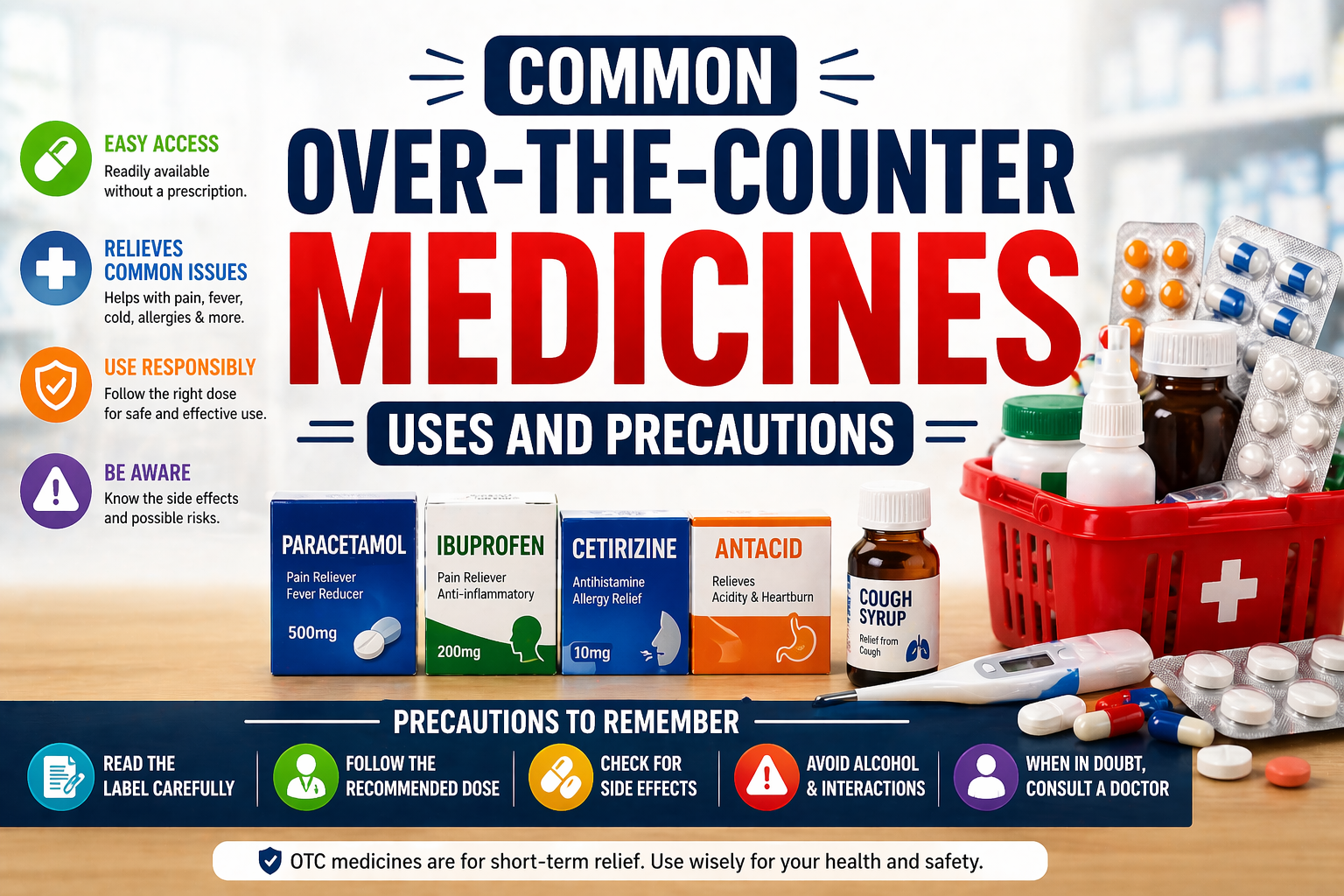
Over-the-counter (OTC) medicines are medications you can purchase without a prescription. They are widely available, affordable, and genuinely effective when used correctly. But “no prescription required” does not mean “no risk involved. “Misuse of OTC medicines is far more common than most people realize, and in some cases, it can cause serious harm.
This guide gives you a clear, honest breakdown of the most commonly used OTC medicines—what they do, when to use them, and the precautions that could protect your health.
Please note: The information in this article is for general educational purposes only. Always read medicine packaging carefully and consult a qualified healthcare professional before starting any medication. For full details, please review our Privacy Policy and visit our About page to understand how we create our content.
What Are Over-the-Counter Medicines?
OTC medicines are drugs deemed safe enough for public use without direct physician supervision. They treat a wide range of common conditions—pain, fever, allergies, digestive issues, cold and flu symptoms, and more.
However, “safe for general use” comes with important caveats:
- Safe does not mean side-effect free
- “Safe” does not mean suitable for everyone.
- Safe does not mean you can take any amount you like.
- “Safe” does not mean they can replace professional medical care for serious conditions.
Understanding these medicines properly — not just taking them blindly — is one of the most important health literacy skills you can develop. Pair this knowledge with smart daily habits like those covered in our guide on Daily Nutrition Tips for a Healthy Lifestyle—because a well-nourished body often needs less medication to begin with.
1. Paracetamol (Acetaminophen) — The Most Used OTC Medicine in the World
Brand names: Panadol, Calpol, Tylenol
Paracetamol is the world’s most widely consumed OTC medicine—found in virtually every home, hospital, and first aid kit on the planet. It is the go-to treatment for mild to moderate pain and fever.
Uses
- Headaches and migraines
- Fever reduction in adults and children
- Muscle aches and general body pain
- Toothache and post-dental procedure pain
- Cold and flu symptom relief
How It Works
Paracetamol works by blocking the production of prostaglandins—chemicals in the brain that trigger pain and fever signals. Unlike NSAIDs (discussed below), it does not reduce inflammation significantly.
Recommended Dosage
- Adults: 500mg–1,000mg per dose, every 4–6 hours as needed
- Maximum daily dose: 4,000mg (4 grams) — never exceed this
- Children: Dose strictly by weight—always follow packaging or doctor’s guidance
Critical Precautions
- Liver damage risk: Paracetamol overdose is one of the leading causes of acute liver failure worldwide. The danger is that overdose symptoms are often delayed—you may feel fine for 24–48 hours before serious liver damage becomes apparent.
- Hidden paracetamol: Many combination cold/flu products contain paracetamol. Taking these alongside separate paracetamol tablets is a common and dangerous mistake—always check all labels.
- Alcohol: Even moderate alcohol consumption significantly increases liver toxicity risk when combined with paracetamol.
- Liver conditions: Anyone with pre-existing liver disease should consult a doctor before use.
💡 Key Rule: More paracetamol does not mean faster or stronger relief. Stick to the recommended dose—exceeding it provides no additional benefit and significantly increases harm risk.
2. Ibuprofen — Anti-Inflammatory Pain Relief
Brand names: Brufen, Advil, Nurofen
Ibuprofen belongs to a class of drugs called NSAIDs (Non-Steroidal Anti-Inflammatory Drugs). Unlike paracetamol, it actively reduces inflammation—making it more effective for certain types of pain.
Uses
- Inflammatory pain — arthritis, muscle strains, sports injuries
- Menstrual cramps (dysmenorrhea) — highly effective
- Dental pain and post-procedure swelling
- Headaches and migraines
- Fever reduction
- Back pain with an inflammatory component
How It Works
Ibuprofen blocks COX enzymes (cyclooxygenase-1 and COX-2), which produce prostaglandins responsible for pain, fever, and inflammation. This is also why it carries more systemic side effects than paracetamol.
Recommended Dosage
- Adults: 200–400mg per dose, every 4–6 hours
- Maximum daily dose: 1,200mg for self-medication (up to 3,200mg under medical supervision)
- Always take with food—this significantly reduces stomach irritation
Critical Precautions
- Stomach lining: Ibuprofen can damage the stomach lining, causing gastritis or ulcers—especially with long-term use or on an empty stomach.
- Kidney function: NSAIDs reduce blood flow to the kidneys. People with kidney disease, dehydration, or elderly individuals are at higher risk.
- Cardiovascular risk: Long-term or high-dose use increases risk of heart attack and stroke—not for daily chronic use without medical supervision
- Pregnancy: Avoid ibuprofen—especially in the third trimester—without explicit medical advice
- Asthma: Some asthma patients are sensitive to NSAIDs—they can trigger bronchospasm.
- Blood thinners: Ibuprofen interacts with warfarin and similar medications—consult your doctor.
3. Antihistamines—For Allergies and More
Brand names: Loratadine (Claritin), Cetirizine (Zyrtec), Diphenhydramine (Benadryl)
Antihistamines are among the most versatile OTC medicines available. They work by blocking histamine receptors—histamine being the chemical your immune system releases during allergic reactions.
Uses
- Seasonal allergies (hay fever) — sneezing, runny nose, itchy eyes
- Skin allergies — hives, rashes, insect bites
- Motion sickness (certain antihistamines)
- Sleep aid (older-generation antihistamines like diphenhydramine)
- Cold and flu symptom relief — runny nose
Two Generations — Important Difference
| Type | Examples | Sedation | Duration |
|---|---|---|---|
| First Generation | Diphenhydramine (Benadryl), Chlorphenamine | High — causes significant drowsiness | 4–6 hours |
| Second Generation | Cetirizine, Loratadine, Fexofenadine | Minimal to none | 12–24 hours |
For daytime use, second-generation antihistamines are strongly preferred — they control allergy symptoms without impairing your ability to drive, work, or function.
Critical Precautions
- Drowsiness: Never drive or operate heavy machinery after taking first-generation antihistamines.
- Elderly patients: First-generation antihistamines carry particular risks in older adults—confusion, urinary retention, falls
- Alcohol: Dramatically intensifies sedative effects — never combine
- Prostate issues: Antihistamines can worsen urinary symptoms in men with enlarged prostates
4. Antacids — For Digestive Discomfort
Brand names: Gaviscon, Mylanta, Eno, Tums, Pepto-Bismol
Antacids are among the most commonly self-medicated conditions worldwide—acid reflux, heartburn, indigestion, and stomach discomfort affect millions daily.
Uses
- Heartburn and acid reflux
- Indigestion and bloating after meals
- Stomach discomfort from spicy or heavy food
- Nausea (certain formulations)
Types of Antacids
- Calcium carbonate (Tums): Fast-acting, also provides calcium—can cause constipation with overuse
- Magnesium hydroxide: Fast relief, mild laxative effect
- Aluminum hydroxide: Longer acting, can cause constipation
- Combination products (Gaviscon): Create a physical barrier on stomach contents, reducing reflux.
Critical Precautions
- Masking serious conditions: Frequent heartburn or reflux can indicate GERD, H. pylori infection, or even esophageal disease. Using antacids daily without investigation delays necessary diagnoses.
- Drug interactions: Antacids affect the absorption of many other medications—including antibiotics and heart medications. Always take other medicines 2 hours before or after antacids.
- Kidney disease: High-dose magnesium or aluminum antacids require caution in kidney disease.
- Sodium content: Some antacids (like Eno) are high in sodium—problematic for people managing blood pressure
💡 Warning Sign: If you need antacids more than twice a week consistently, this is not a problem to self-manage long-term. See a doctor — you may have an underlying condition requiring proper treatment.
5. Oral Rehydration Salts (ORS) — Underrated and Essential
Brand names: Pedialyte, Electrolit, homemade ORS
ORS is arguably the most life-saving OTC product on this list—yet it is often overlooked by adults who associate it only with children’s diarrhea.
Uses
- Diarrhea and vomiting — replacing lost fluids and electrolytes
- Dehydration from fever, heat, or intense physical activity
- Hangover recovery
- Post-exercise rehydration when electrolytes are depleted
How It Works
ORS contains a precise balance of glucose and electrolytes (sodium, potassium, and chloride) that triggers a specific intestinal absorption mechanism—allowing fluids to be absorbed even during active diarrhea.
Plain water alone does not replace electrolytes lost during diarrhea or vomiting, which is why ORS is superior to just drinking water in these situations.
Precautions
- Severe dehydration—if someone cannot keep ORS down or shows signs of severe dehydration (sunken eyes, no urination for 8+ hours, extreme weakness), seek emergency care immediately
- Diabetes: Some ORS formulations contain sugar—check labeling.
6. Cough and Cold Medicines — Use With Caution
Brand names: Various combination products
This category deserves special attention because it is among the most misused OTC medicine categories globally.
Common Ingredients and What They Do
- Dextromethorphan (DXM): Suppresses cough reflex—effective for dry cough
- Guaifenesin: Expectorant — thins mucus to make coughs more productive
- Pseudoephedrine/Phenylephrine: Nasal decongestant — reduces swelling in nasal passages
- Antihistamine component: Dries secretions, reduces runny nose
Critical Precautions
- Hidden paracetamol: Most combination cold medicines contain paracetamol—as mentioned earlier, taking these with separate paracetamol is dangerous.
- Children under 6: Most cough and cold medicines are not recommended for children under 6—evidence of effectiveness is poor and risks are real.
- High blood pressure: Decongestants (pseudoephedrine) raise blood pressure—avoid if hypertensive
- DXM abuse: Dextromethorphan is subject to misuse at high doses—pharmacies in many countries now restrict quantity purchases.
General OTC Medicine Safety Rules
Regardless of which OTC medicine you’re using, these rules apply universally:
- Always read the full label—including ingredients, dosage, warnings, and contraindications
- Never exceed the recommended dose—more is not better; it’s dangerous
- Check for interactions with other medicines you take regularly
- Store correctly—most medicines require cool, dry storage away from humidity (not in the bathroom)
- Check expiry dates—expired medicines can be ineffective or harmful
- Keep out of children’s reach — always, without exception
- Don’t share medicines—what’s safe for you may not be safe for someone else
When OTC Is Not Enough—See a Doctor
OTC medicines manage symptoms—they don’t treat underlying conditions. Seek professional medical care if:
- Symptoms persist for more than 7–10 days.
- Fever exceeds 39.5°C (103°F) or lasts more than 3 days
- Symptoms are severe or rapidly worsening
- You are pregnant, breastfeeding, or managing a chronic condition.
- You are taking prescription medications regularly.
- Symptoms return immediately after stopping OTC treatment
Conclusion: Informed Use is Safe Use
Over-the-counter medicines are remarkable tools — accessible, affordable, and effective when used correctly. But they demand respect. Understanding what you’re taking, why you’re taking it, and what risks it carries is not optional — it’s basic health responsibility.
Build your health knowledge systematically. Alongside understanding medicines, focus on the daily habits that reduce your need for them in the first place—good nutrition as covered in our Daily Nutrition Tips for a Healthy Lifestyle guide and smart supplementation as detailed in our Top 5 Supplements to Boost Strength Naturally guide—because a strong, well-nourished body is always your best medicine.