Medical health is one of the most important aspects of human life. It determines not only how long we live but also the quality of our lives. In a world where diseases are increasing due to lifestyle changes, stress, and environmental factors, understanding medical health has become essential.
Medical care is not just about treating illnesses—it’s about preventing diseases, maintaining balance in the body, and ensuring long-term wellness. This guide will help you understand the fundamentals of medical health, its importance, and practical ways to improve your well-being.
What Is Medical Health?
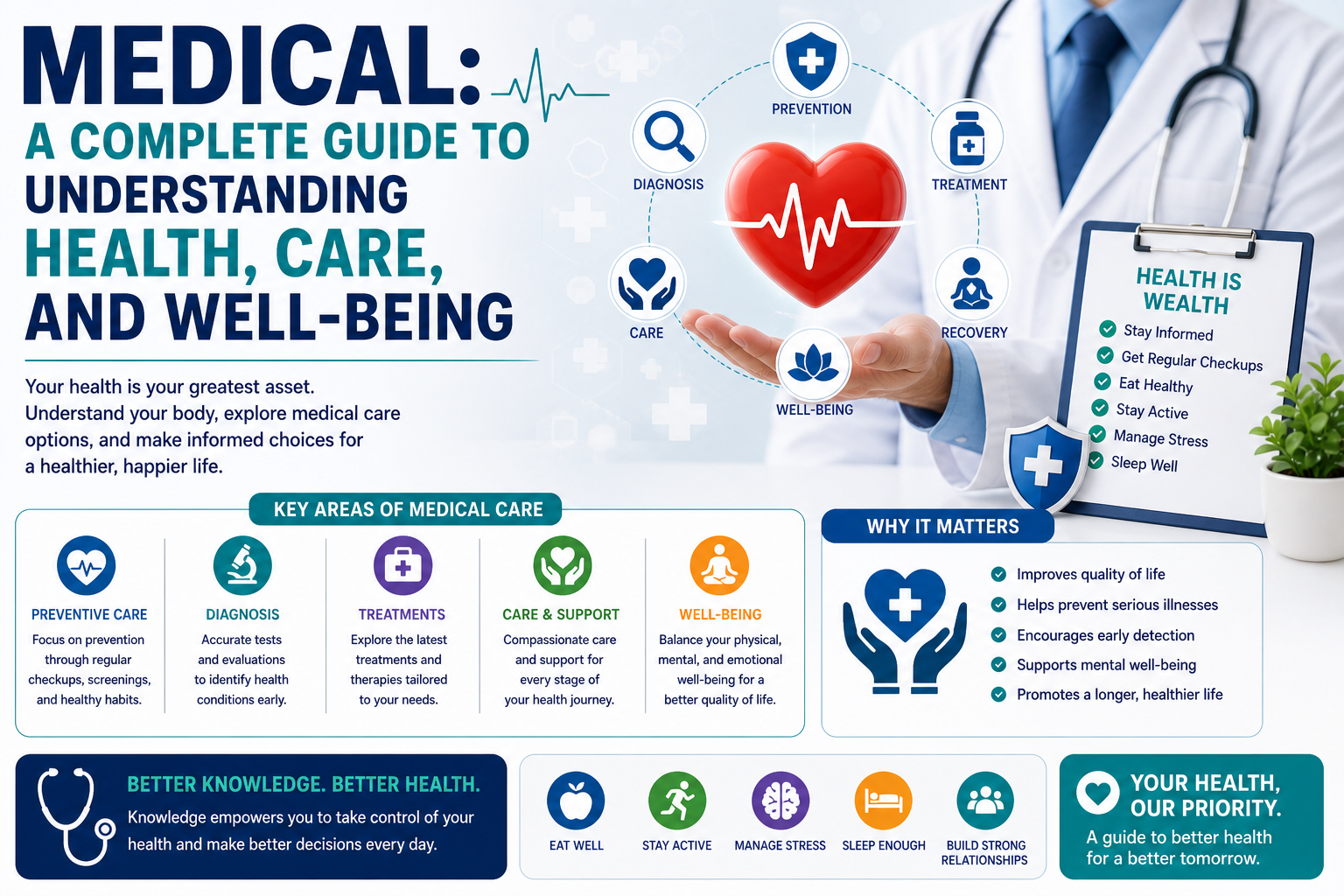
Medical health refers to the overall condition of your body and mind, including the prevention, diagnosis, and treatment of diseases. It involves maintaining physical, mental, and emotional well-being.
Medical health includes:
- Physical health
- Mental health
- Preventive care
- Nutrition and lifestyle
- Medical awareness
When these elements are balanced, a person can live a healthier and more productive life.
Importance of Medical Health
Maintaining good medical health is essential for a better life.
Key Benefits:
- Longer life expectancy
- Reduced risk of diseases
- Improved energy levels
- Better mental clarity
- Enhanced quality of life
Ignoring health can lead to serious consequences, including chronic diseases and reduced productivity.
Preventive Healthcare: The First Line of Defense
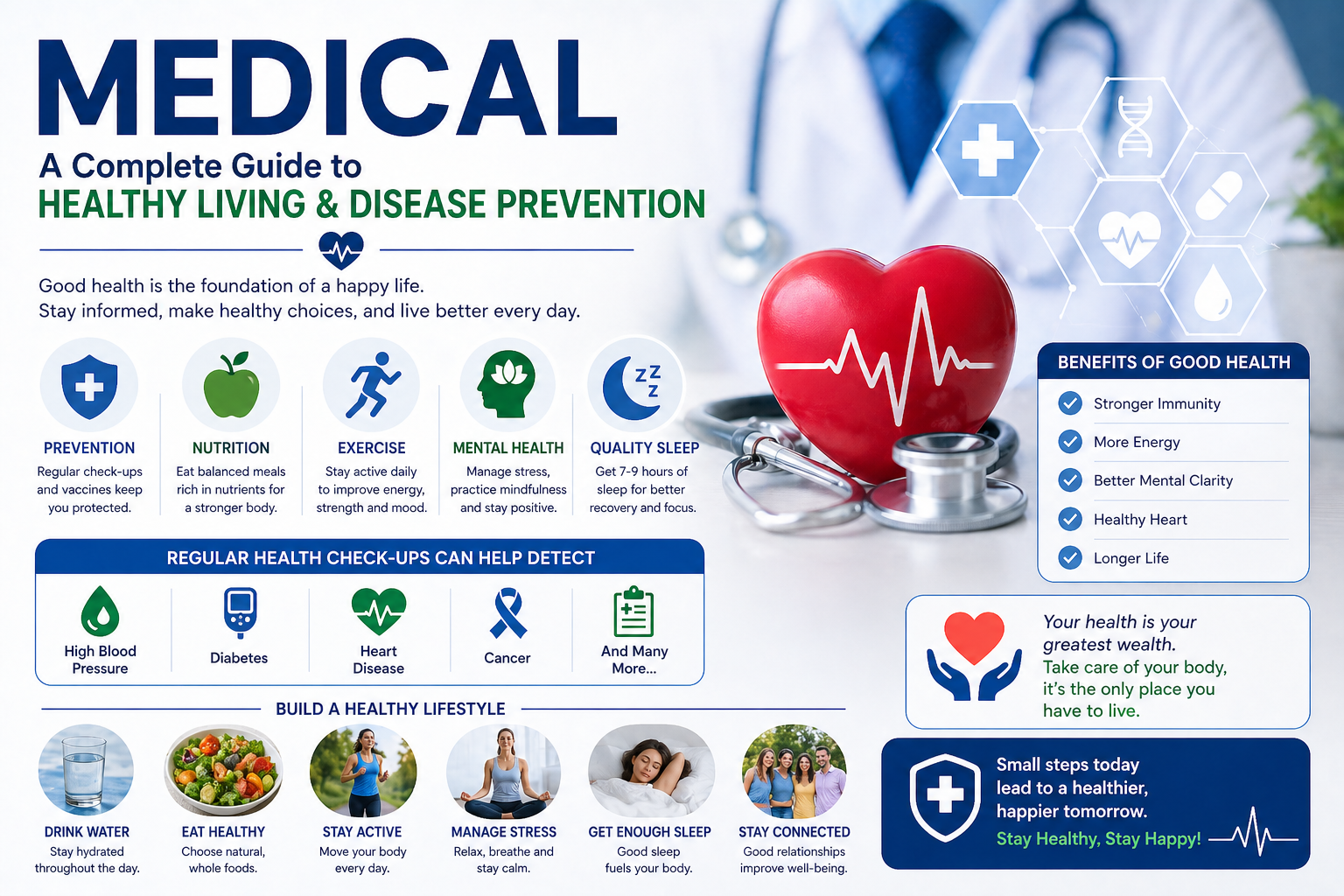
Preventive healthcare focuses on avoiding diseases before they occur. It is one of the most effective ways to maintain health.
Common Preventive Measures:
- Regular medical check-ups
- Vaccinations
- Healthy diet
- Exercise
- Routine screenings
Why It Matters:
Early detection can save lives and reduce treatment costs.
Common Medical Conditions
Understanding common health issues helps you take better care of yourself.
1. Heart Disease
Caused by poor diet, lack of exercise, and stress.
2. Diabetes
A condition where blood sugar levels are too high.
3. Obesity
Excess body weight increases the risk of other diseases.
4. Hypertension
High blood pressure that can lead to serious complications.
5. Respiratory Diseases
Conditions like asthma and chronic bronchitis.
Being aware of these conditions helps in early prevention and management.
Role of Nutrition in Medical Health
Nutrition plays a vital role in maintaining medical health.
Healthy Eating Tips:
- Eat more fruits and vegetables
- Choose whole grains
- Limit processed foods
- Reduce sugar and salt intake
- Maintain portion control
A balanced diet supports immunity, energy, and overall well-being.
Importance of Physical Activity
Regular exercise is essential for maintaining a healthy body.
Benefits:
- Improves heart health
- Strengthens muscles
- Enhances mental health
- Helps maintain weight
Recommended Activities:
- Walking or jogging
- Cycling
- Yoga
- Strength training
Even moderate activity can have significant health benefits.
Mental Health and Medical Care
Mental health is a critical part of overall medical health.
Common Issues:
- Stress
- Anxiety
- Depression
Ways to Improve Mental Health:
- Practice mindfulness
- Stay connected with others
- Seek professional help when needed
- Maintain a balanced lifestyle
Ignoring mental health can lead to serious long-term problems.
Hygiene and Disease Prevention
Good hygiene is one of the simplest ways to prevent illness.
Basic Practices:
- Wash hands regularly
- Maintain oral hygiene
- Keep surroundings clean
- Practice safe food handling
These habits reduce the spread of infections.
Importance of Sleep
Sleep is essential for recovery and overall health.
Benefits:
- Improves brain function
- Boosts immunity
- Enhances mood
- Supports physical recovery
Aim for 7–9 hours of quality sleep each night.
Medical Treatments and Care
Medical treatments help manage and cure diseases.
Types of Treatments:
- Medications
- Surgery
- Therapy
- Lifestyle changes
Following medical advice is crucial for effective treatment.
Technology in Modern Medicine
Technology has transformed healthcare significantly.
Innovations:
- Telemedicine
- AI diagnostics
- Robotic surgery
- Advanced imaging
These advancements improve accuracy and efficiency in medical care.
Lifestyle and Medical Health
Your lifestyle choices have a major impact on your health.
Healthy Habits:
- Eat balanced meals
- Stay active
- Manage stress
- Avoid harmful substances
- Get enough sleep
Small changes can lead to big improvements.
Risks of Ignoring Medical Health
Neglecting health can lead to:
- Chronic diseases
- Reduced life expectancy
- Increased medical costs
- Poor quality of life
Taking care of your health is an investment in your future.
Building a Healthy Routine
Creating a daily routine can improve your medical health.
Simple Routine:
- Morning exercise
- Healthy meals
- Regular breaks
- Relaxation time
- Proper sleep
Consistency is key to long-term success.
Why Medical Awareness Matters
Being informed about your health helps you make better decisions.
Benefits:
- Early detection of issues
- Better treatment choices
- Reduced risks
- Improved lifestyle
Knowledge empowers you to take control of your health.
Final Thoughts
Medical health is the foundation of a long and fulfilling life. By focusing on prevention, maintaining a healthy lifestyle, and staying informed, you can significantly improve your well-being.
You don’t need to make drastic changes overnight. Start with small steps—eat better, move more, and take care of your mental health. Over time, these habits will lead to a healthier and happier life.
Remember, your health is your greatest asset. Take care of it today for a better tomorrow.