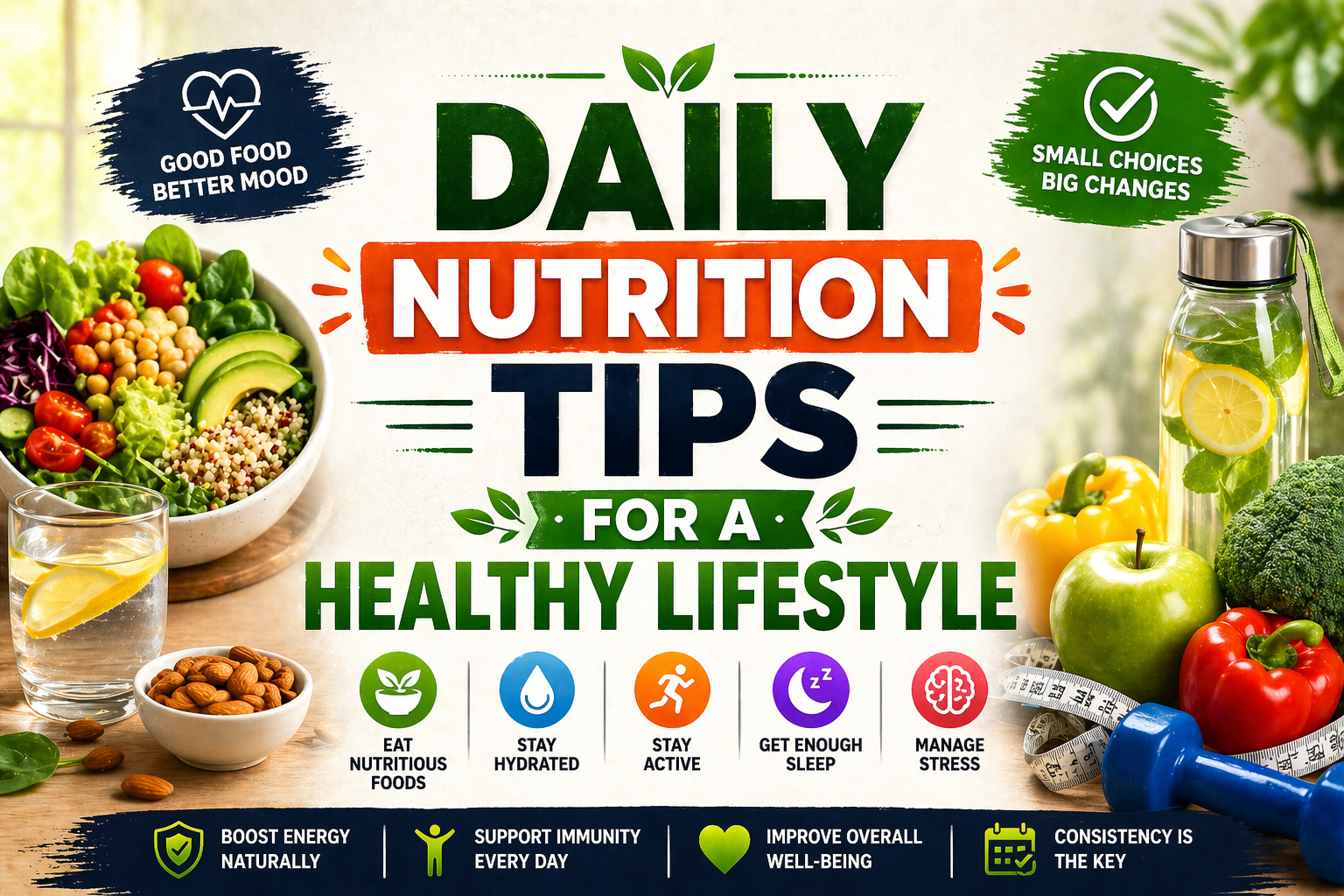
Nutrition doesn’t have to be complicated. Yet somehow, in a world flooded with fad diets, conflicting headlines, and miracle food claims, eating well has become one of the most confusing things a person can do.
The truth is simple: consistent, small daily habits beat perfect eating on some days and chaos on others. You don’t need a radical overhaul. You need practical, sustainable nutrition habits that fit into your real life—and that you can actually stick to.
This guide gives you exactly that. No extreme diets. No impossible restrictions. Just clear, actionable daily nutrition tips that are rooted in science and built for real people with real lives.
Before we dive in, a quick note: the information shared here is for general educational purposes. For personalized dietary advice tailored to your specific health conditions, please consult a qualified professional—and review our Disclaimer for full details. If you’d like to learn more about who we are and why we create this content, visit our About page.
Tip #1: Start Your Day With a Protein-Rich Breakfast
What you eat first sets the tone for your entire day — your energy, your hunger, your food choices, and even your mood.
A protein-rich breakfast does three powerful things:
- Reduces hunger hormones (ghrelin) for hours after eating
- Stabilizes blood sugar—preventing the mid-morning energy crash
- Triggers muscle protein synthesis early in the day — critical if you’re active
The worst breakfast choice? Skipping it entirely, or eating refined carbohydrates alone—white bread, sugary cereals, pastries—which spike blood sugar and leave you hungry within 90 minutes.
Best high-protein breakfast options:
- Eggs (boiled, scrambled, or as an omelette with vegetables)
- Greek yogurt with nuts and seeds
- Cottage cheese with fruit
- A protein smoothie with milk, banana, and nut butter
- Lentil or chickpea-based breakfast dishes
Aim for at least 25–30 grams of protein at breakfast for maximum satiety and energy benefits.
Tip #2: Build Every Meal Around the Plate Method
Forget counting calories for a moment. The simplest, most sustainable way to structure a nutritious meal is the plate method:
- ½ of your plate: Non-starchy vegetables (spinach, broccoli, peppers, cucumbers, tomatoes)
- ¼ of your plate: Quality protein (chicken, fish, eggs, lentils, tofu, beef)
- ¼ of your plate: Complex carbohydrates (brown rice, whole wheat roti, oats, sweet potato)
- A small side: Healthy fat (olive oil drizzle, avocado, a handful of nuts)
This method naturally controls portions, ensures nutritional variety, and eliminates the need for obsessive tracking. It works for breakfast, lunch, and dinner—and adapts easily to any cuisine, including Pakistani, Mediterranean, or Asian food.
💡 Practical Tip: Start building your meal with vegetables first — physically put them on the plate first. This simple trick prevents vegetables from being an afterthought and ensures you always get enough.
Tip #3: Eat Enough Protein — Most People Don’t
Protein is the most important macronutrient for body composition, satiety, and metabolic health—yet it is consistently the most under-consumed nutrient in the average diet.
Why protein matters daily:
- Builds and repairs muscle tissue
- Keeps you fuller for longer — protein is the most satiating macronutrient
- Has the highest thermic effect—your body burns more calories digesting protein than carbs or fat
- Supports immune function, hormone production, and enzyme activity
How much do you need?
For a generally healthy, moderately active adult: 1.2–1.6 grams per kg of body weight per day. For those doing regular strength training—and if you’re following our guide on Top 5 Supplements to Boost Strength Naturally—that target rises to 1.6–2.2 g/kg.
Best daily protein sources:
- Eggs — complete protein, highly bioavailable
- Chicken breast and thigh
- Fish — especially tuna, salmon, and sardines
- Lentils, chickpeas, and black beans
- Greek yogurt and cottage cheese
- Paneer and low-fat dairy
Spread protein intake across meals rather than consuming most of it at dinner—your body can only utilize so much protein at once for muscle synthesis.
Tip #4: Make Water Your Default Drink
Hydration is the simplest, cheapest, and most overlooked aspect of daily nutrition — and its impact on health, energy, focus, and even weight management is enormous.
What dehydration actually does:
- Reduces energy and mental focus—even mild dehydration (1–2%) impairs cognitive performance
- Slows metabolism — your body needs water to burn fat efficiently
- Increases hunger — thirst is frequently mistaken for hunger
- Impairs kidney function and digestion
Daily hydration targets:
- Women: Approximately 2.7 liters total fluid per day
- Men: Approximately 3.7 liters total fluid per day
- Add 500 ml–1 liter extra for every hour of exercise
Practical daily hydration habits:
- Drink a full glass of water immediately upon waking—before tea or coffee
- Keep a water bottle visible on your desk at all times.
- Drink a glass of water before every meal—reduces overeating naturally
- Flavor water naturally with lemon, cucumber, or mint if plain water feels boring.
- Monitor urine color — pale straw yellow is ideal
Drinks to minimize:
- Sugary sodas and packaged juices — high in sugar, zero nutrition
- Excessive tea and coffee — mild diuretic effect, fine in moderation
- Energy drinks — high sugar, high caffeine, frequent additives with unclear safety
Tip #5: Don’t Fear Carbohydrates — Choose the Right Ones
Carbohydrates have been unfairly demonized by diet culture. The truth is nuanced: refined carbohydrates are problematic; complex carbohydrates are essential.
Refined carbohydrates (limit these):
- White bread, white rice, maida-based products
- Sugary cereals, packaged biscuits, pastries
- Soft drinks and fruit juices with added sugar
These digest rapidly, spike blood sugar, and leave you hungry and tired within an hour.
Complex carbohydrates (embrace these):
- Whole wheat roti and brown rice
- Oats and barley
- Sweet potatoes and regular potatoes (with skin)
- Lentils, chickpeas, and beans
- Fruits — especially berries, apples, and citrus
Complex carbs digest slowly, provide sustained energy, feed beneficial gut bacteria, and come packaged with fiber, vitamins, and minerals that refined carbs have stripped away.
💡 The Fiber Rule: Aim for at least 25–30 grams of fiber daily from vegetables, fruits, legumes, and whole grains. Most people get less than half this amount — and fiber deficiency is directly linked to poor gut health, high cholesterol, blood sugar instability, and increased cancer risk.
Tip #6: Eat Healthy Fats — Every Single Day
Fat is not the enemy. In fact, certain fats are absolutely essential for brain health, hormone production, joint lubrication, and the absorption of fat-soluble vitamins (A, D, E, and K).
Healthy fats to include daily:
- Extra virgin olive oil — drizzle on salads, use for light cooking
- Avocado — rich in monounsaturated fats and potassium
- Nuts — almonds, walnuts, pistachios (a small handful daily)
- Seeds — chia, flax, sunflower, pumpkin
- Fatty fish — salmon, sardines, mackerel (2–3 times per week)
- Eggs — the yolk contains most of the nutrition
Fats to avoid:
- Trans fats — found in commercially fried foods, margarine, and many packaged snacks. These are genuinely harmful—linked to heart disease, inflammation, and metabolic dysfunction.
- Excessive saturated fat — found in processed meats and full-fat dairy when consumed in very large amounts
Tip #7: Eat Mindfully — Slow Down and Pay Attention
In the modern world, most people eat distracted—scrolling their phone, watching TV, or eating at their desk. This is a significant nutritional problem.
Why mindful eating matters:
- Your brain takes 15–20 minutes to register fullness signals from your stomach. Eating too fast means you consistently overeat before satiety kicks in.
- Distracted eating leads to poor food choices—you reach for whatever is convenient rather than what nourishes you.
- Chewing thoroughly improves digestion—digestion begins in the mouth, and inadequate chewing puts unnecessary strain on your digestive system.
Simple mindful eating habits:
- Put your phone away during meals—even for 15 minutes
- Chew each bite 20–30 times before swallowing
- Use smaller plates—visual cues strongly influence how much you eat
- Pause halfway through your meal and check your hunger level before continuing.
- Eat at a table, not in bed or on the sofa
Tip #8: Plan and Prep — Remove the Guesswork
The biggest predictor of poor nutrition is not lack of knowledge — it’s lack of preparation. When you’re hungry and tired at 7pm with nothing ready, you will reach for whatever is fastest — usually something processed.
Weekly meal prep basics:
- Boil a batch of eggs at the start of the week.
- Cook a large pot of lentils, chickpeas, or beans
- Wash and chop vegetables in advance—store in containers in the fridge
- Prepare a grain base (brown rice, oats) that can be used across multiple meals.
- Keep healthy snacks visible and accessible — nuts, fruit, yogurt
Thirty minutes of preparation on Sunday can transform your entire week of eating.
Tip #9: Follow the 80/20 Rule — Not Perfection
One of the most damaging myths in nutrition is that you must eat perfectly 100% of the time. This all-or-nothing thinking leads to cycles of restriction and bingeing that are far worse for your health than simply eating well most of the time.
The 80/20 rule is a sustainable alternative:
- 80% of the time: Whole foods, balanced meals, adequate protein, plenty of vegetables
- 20% of the time: Enjoy food socially, have the dessert, eat out without guilt
This approach is sustainable for years—and years of consistent good eating is infinitely more powerful than months of perfection followed by burnout.
Tip #10: Read Labels Know What You’re Actually Eating
Packaged food manufacturers are skilled at making unhealthy products appear healthy. Learning to read nutrition labels is a fundamental daily nutrition skill.
What to check:
- Serving size first—all numbers on the label refer to one serving, which is often unrealistically small
- Added sugar — aim for less than 25g total added sugar per day
- Sodium—high sodium intake is linked to hypertension; aim for under 2,300 mg daily
- Ingredients list—if you can’t pronounce most of the ingredients, put it back
- Fiber content—choose products with at least 3g fiber per serving
💡 Simple Rule: If sugar appears in the first three ingredients, it’s a sugar product — regardless of what the front of the package claims.
Conclusion: Small Daily Choices, Enormous Long-Term Results
Nutrition is not a sprint — it’s a practice. The goal is not a perfect diet for 30 days. The goal is a nourishing, sustainable relationship with food that supports your energy, your health, and your longevity for decades.
Start with one tip from this list. Master it. Then add another. Over months and years, these small daily choices compound into extraordinary results—a stronger body, a sharper mind, and a longer, healthier life.
If you’re also working on building physical strength, pair these nutrition habits with the right supplementation strategy—our guide on Top 5 Supplements to Boost Strength. Naturally is the perfect next read.
For any questions about your personal health and nutrition journey, our team is always here—contact us directly and we’ll point you in the right direction.
The content in this article is intended for general informational purposes only. Please read our disclaimer before making any health or dietary decisions based on this information.