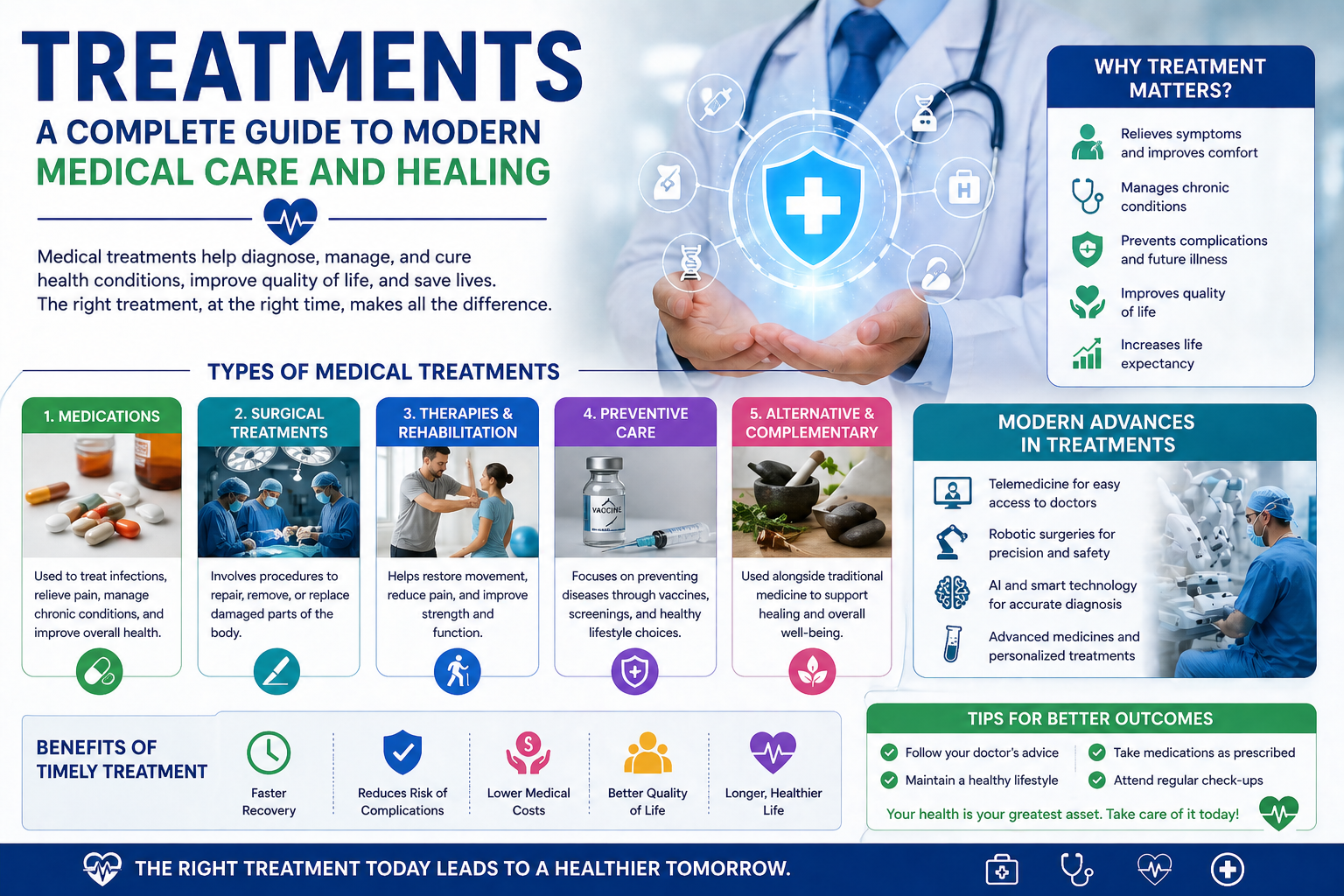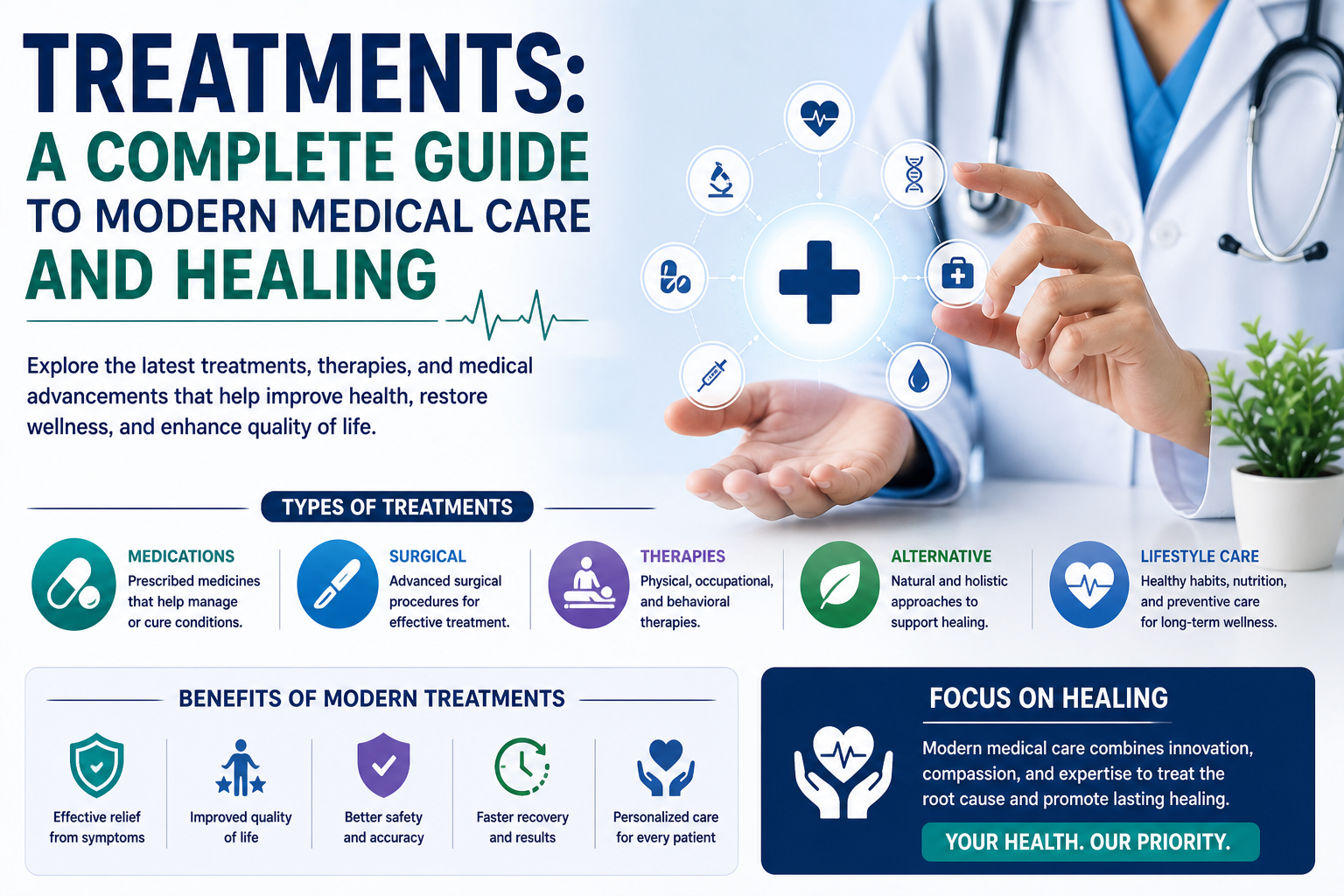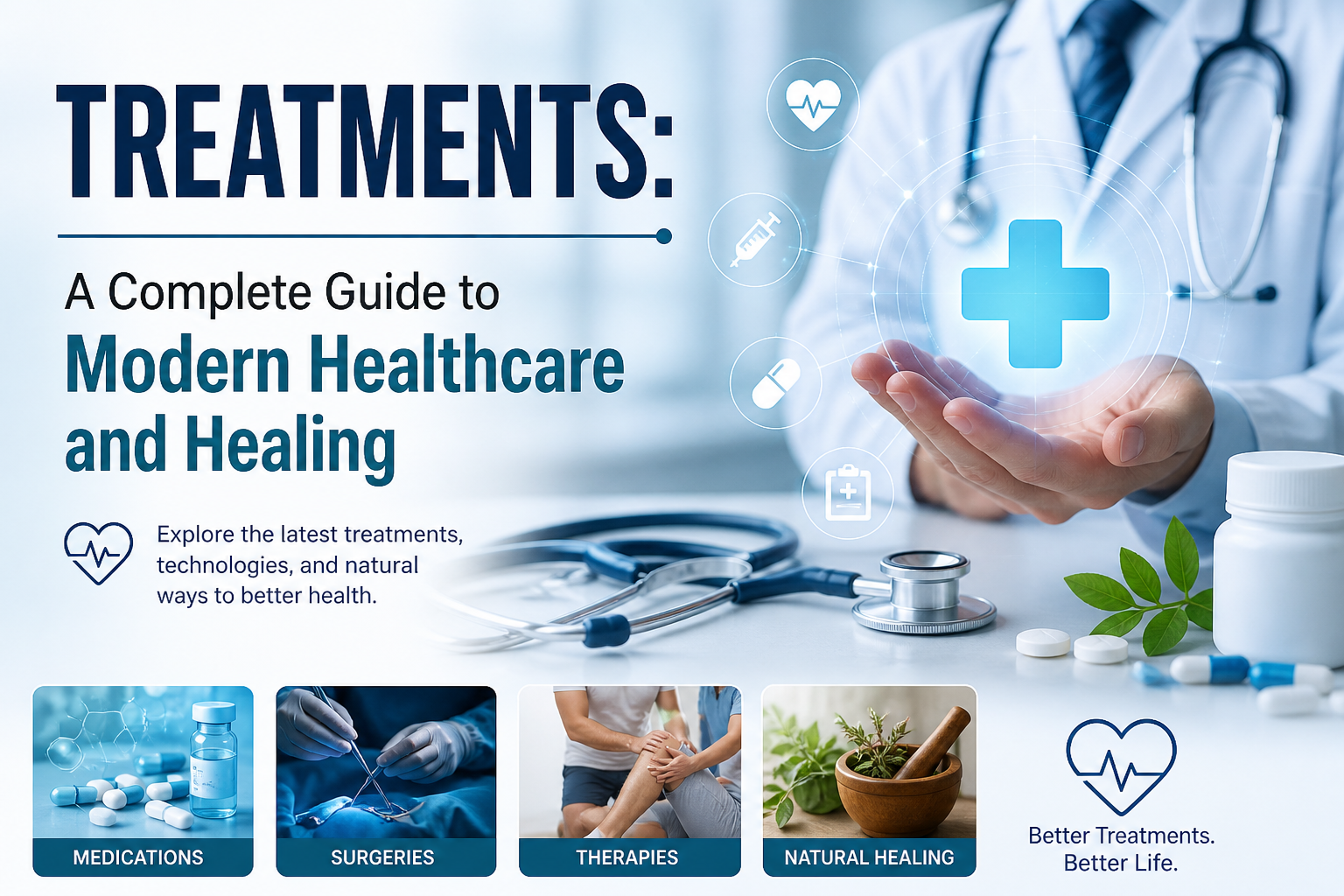
Medical treatments are an essential part of healthcare, helping people recover from illnesses, manage chronic conditions, and improve their overall quality of life. With rapid advancements in medical science, treatments today are more effective, personalized, and accessible than ever before.
Understanding treatments is important because it allows individuals to make informed decisions about their health. Whether it’s medication, therapy, surgery, or lifestyle changes, each treatment plays a unique role in maintaining and restoring well-being.
In this detailed guide, we’ll explore different types of treatments, their benefits, risks, and how they contribute to a healthier life.
What Are Treatments?
Treatments refer to any medical intervention used to cure, manage, or prevent diseases and health conditions. These can range from simple home remedies to complex surgical procedures.
The primary goals of treatments include:
- Eliminating disease or infection
- Reducing symptoms and discomfort
- Preventing complications
- Improving quality of life
Treatments are often tailored to individual needs based on age, medical history, and the severity of the condition.
Types of Medical Treatments
Medical treatments can be categorized into several types depending on their purpose and approach.
1. Medication-Based Treatments
Medications are one of the most common and effective treatment methods. They are used to treat infections, control symptoms, and manage chronic conditions.
Examples:
- Antibiotics for bacterial infections
- Pain relievers for injuries or headaches
- Antidepressants for mental health conditions
Benefits:
- Fast and convenient
- Widely available
- Effective for many conditions
However, medications should always be taken under medical supervision to avoid misuse or side effects.
2. Surgical Treatments
Surgery involves physical procedures to treat or remove health problems. It is often recommended when other treatments are not effective.
Common Surgical Procedures:
- Removal of tumors
- Organ transplants
- Heart bypass surgery
Advantages:
- Can provide permanent solutions
- Effective for severe conditions
Modern techniques such as minimally invasive surgery have made procedures safer and reduced recovery time.
3. Physical Therapy and Rehabilitation
Physical therapy focuses on restoring movement, strength, and function after injury or illness.
Used For:
- Sports injuries
- Post-surgery recovery
- Chronic pain management
Benefits:
- Improves mobility
- Reduces pain naturally
- Prevents future injuries
Rehabilitation is crucial for long-term recovery and independence.
4. Preventive Treatments
Preventive treatments aim to stop diseases before they occur.
Examples:
- Vaccinations
- Routine health screenings
- Healthy lifestyle practices
Importance:
Preventive care reduces the risk of serious diseases and lowers healthcare costs.
5. Mental Health Treatments
Mental health treatments focus on improving emotional and psychological well-being.
Types:
- Counseling and therapy
- Medication
- Mindfulness and relaxation techniques
Benefits:
- Reduces stress and anxiety
- Improves emotional balance
- Enhances overall quality of life
6. Alternative and Complementary Treatments
These treatments are often used alongside traditional medicine to enhance healing.
Examples:
- Herbal remedies
- Acupuncture
- Yoga and meditation
While beneficial, these should be used under professional guidance.
Importance of Early Treatment
Early treatment is one of the most important factors in successful recovery.
Benefits:
- Faster healing
- Reduced complications
- Lower medical costs
- Better long-term outcomes
Delaying treatment can lead to more serious health issues.
Role of Technology in Modern Treatments
Technology has transformed the healthcare industry, making treatments more effective and efficient.
Innovations:
- Telemedicine for remote consultations
- Robotic-assisted surgeries
- Artificial intelligence for diagnosis
- Advanced imaging systems
These advancements improve accuracy and patient outcomes.
Personalized Medicine
Modern healthcare is moving toward personalized treatments tailored to individual needs.
Based On:
- Genetic makeup
- Lifestyle factors
- Medical history
Benefits:
- Higher treatment effectiveness
- Fewer side effects
- Better patient satisfaction
Personalized medicine ensures that treatments are more targeted and efficient.
Lifestyle as a Treatment
In many cases, lifestyle changes can act as powerful treatments.
Healthy Practices:
- Eating a balanced diet
- Exercising regularly
- Managing stress
- Getting enough sleep
These changes help prevent and manage many health conditions naturally.
Risks and Side Effects of Treatments
While treatments are beneficial, they may come with risks.
Common Risks:
- Medication side effects
- Allergic reactions
- Surgical complications
It’s important to consult healthcare professionals before starting any treatment.
Choosing the Right Treatment
Selecting the right treatment depends on several factors:
- Type of illness
- Severity of condition
- Medical advice
- Patient preferences
Making informed decisions ensures better health outcomes.
Future of Medical Treatments
The future of healthcare is promising, with ongoing innovations such as:
- Gene therapy
- Regenerative medicine
- Personalized vaccines
- Digital health monitoring
These advancements are expected to revolutionize treatments and improve patient care.
Final Thoughts
Treatments are a vital part of maintaining and improving health. From medications and therapies to surgeries and lifestyle changes, each treatment plays a role in healing and well-being.
The key to effective treatment is awareness, early action, and consistency. By understanding your options and following medical advice, you can take control of your health and lead a better life.
Remember, your health is your greatest asset invest in it wisely by choosing the right treatments and maintaining a healthy lifestyle.