Mental health is one of the most important parts of overall well-being. It affects how we think, feel, behave, and handle daily challenges. In modern society, stress, anxiety, depression, and emotional exhaustion have become increasingly common due to busy lifestyles, work pressure, financial stress, and social expectations.
Despite its importance, mental health is often ignored or misunderstood. Many people focus only on physical health while neglecting emotional and psychological well-being. However, true health includes both the body and the mind.
Good mental health allows people to cope with stress, build healthy relationships, work productively, and enjoy life more fully. In this detailed guide, we will explore everything about mental health, including its importance, causes, common disorders, symptoms, treatment options, and practical wellness tips for improving emotional well-being.
What Is Mental Health?
Mental health refers to emotional, psychological, and social well-being. It influences:
- How we think
- How we feel
- How we react to situations
- How we handle stress
- How we interact with others
Mental health affects every stage of life, from childhood to adulthood.
Good mental health does not mean being happy all the time. It means being able to manage emotions, recover from difficulties, and maintain balance during challenging situations.
Why Mental Health Is Important
Mental health is connected to almost every aspect of life.
Benefits of Good Mental Health:
- Better emotional control
- Improved concentration and focus
- Stronger relationships
- Better physical health
- Increased productivity
- Greater self-confidence
When mental health is poor, it can negatively affect physical health, work performance, and personal relationships.
Common Mental Health Problems
Mental health disorders are very common worldwide.
1. Anxiety Disorders
Anxiety disorders involve excessive fear, nervousness, and worry.
Symptoms:
- Restlessness
- Rapid heartbeat
- Sweating
- Difficulty concentrating
- Panic attacks
Chronic anxiety can interfere with daily life.
2. Depression
Depression is more than temporary sadness. It is a serious mood disorder that affects thoughts, emotions, and energy levels.
Symptoms:
- Persistent sadness
- Loss of motivation
- Fatigue
- Sleep problems
- Feelings of hopelessness
3. Stress
Stress is the body’s natural reaction to pressure or challenges.
Common Causes:
- Work pressure
- Financial difficulties
- Relationship problems
- Health concerns
Long-term stress can lead to serious physical and emotional health problems.
4. Burnout
Burnout is emotional, physical, and mental exhaustion caused by prolonged stress.
Signs of Burnout:
- Constant fatigue
- Lack of motivation
- Irritability
- Feeling emotionally drained
5. Mood Disorders
Mood disorders affect emotional stability and daily functioning.
Causes of Mental Health Issues
Mental health problems can result from multiple factors.
Common Causes:
- Genetics and family history
- Trauma or abuse
- Chronic stress
- Social isolation
- Financial problems
- Poor lifestyle habits
- Lack of sleep
Mental health conditions are often caused by a combination of biological, psychological, and environmental factors.
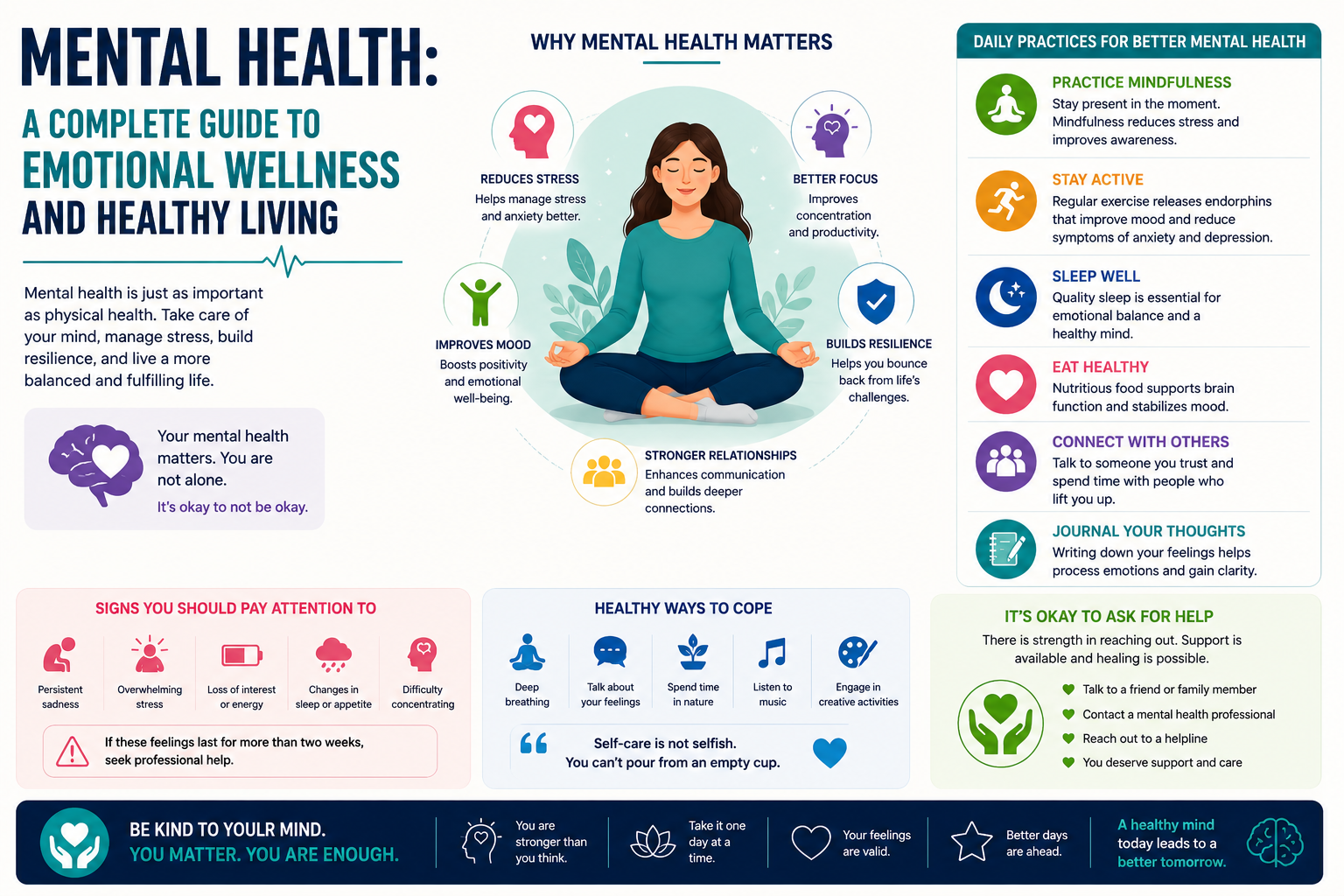
Signs and Symptoms of Poor Mental Health
Recognizing early signs is important for prevention and treatment.
Warning Signs:
- Persistent sadness or anxiety
- Mood swings
- Difficulty concentrating
- Withdrawal from social activities
- Changes in sleep or eating habits
- Loss of interest in hobbies
- Feeling overwhelmed
Ignoring these signs can worsen mental health over time.
Relationship Between Mental and Physical Health
Mental and physical health are closely connected.
Effects of Poor Mental Health on the Body:
- Weakened immune system
- Increased blood pressure
- Digestive issues
- Fatigue and low energy
- Sleep disturbances
Likewise, physical illness can negatively affect emotional well-being.
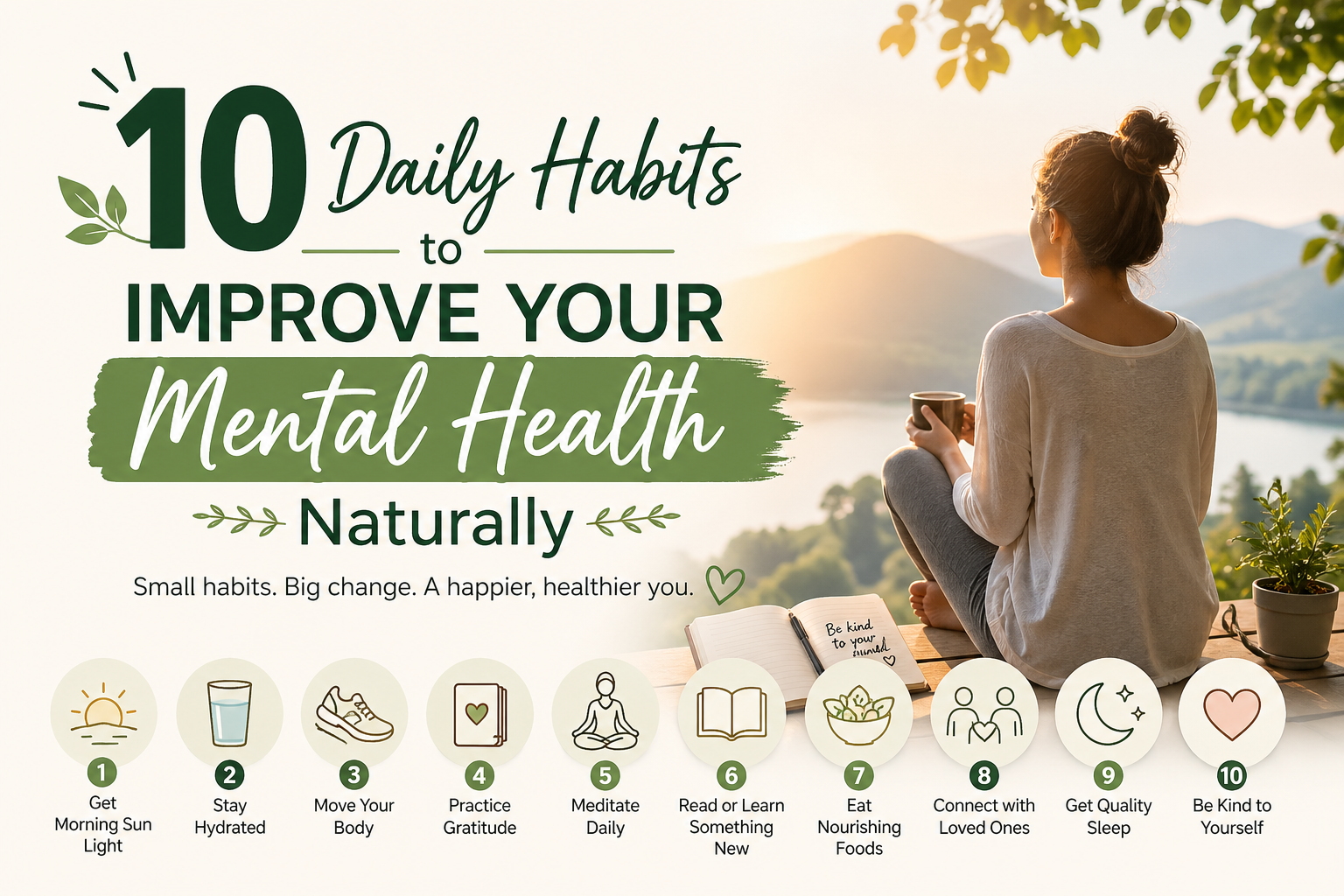
How to Improve Mental Health Naturally
Improving mental health requires consistent lifestyle habits and self-care practices.
1. Exercise Regularly
Physical activity improves both physical and emotional health.
Benefits:
- Releases endorphins (feel-good hormones)
- Reduces stress and anxiety
- Improves mood and confidence
Activities like walking, yoga, and cycling are highly beneficial.
2. Get Enough Sleep
Sleep is essential for emotional recovery and brain function.
Tips for Better Sleep:
- Sleep 7–9 hours daily
- Maintain a consistent sleep schedule
- Avoid screens before bedtime
Poor sleep can worsen anxiety and depression.
3. Eat a Healthy Diet
Nutrition directly affects mental wellness.
Foods That Support Brain Health:
- Fruits and vegetables
- Whole grains
- Nuts and seeds
- Omega-3 fatty acids
Avoid excessive sugar and processed foods.
4. Practice Mindfulness and Meditation
Mindfulness helps reduce stress and improve emotional balance.
Benefits:
- Better concentration
- Reduced anxiety
- Improved emotional awareness
Even a few minutes daily can make a difference.
5. Build Healthy Relationships
Strong social connections support emotional well-being.
Tips:
- Spend time with supportive people
- Communicate openly
- Avoid toxic relationships
Positive relationships reduce loneliness and stress.
6. Limit Social Media Use
Excessive social media can increase anxiety and negatively affect self-esteem.
Healthy Digital Habits:
- Take screen breaks
- Avoid negative content
- Focus on real-life interactions
7. Practice Self-Care
Self-care helps maintain emotional balance.
Self-Care Activities:
- Reading
- Listening to music
- Spending time outdoors
- Pursuing hobbies
Mental Health Treatments
Professional treatment may be necessary for serious mental health conditions.
Common Treatment Options:
Therapy and Counseling
Talking with professionals helps individuals manage emotions and behaviors.
Medication
Doctors may prescribe medications for conditions like anxiety or depression.
Cognitive Behavioral Therapy (CBT)
CBT helps people identify and change negative thought patterns.
Support Groups
Support groups provide emotional connection and encouragement.
Importance of Seeking Help
Many people avoid seeking help due to fear or stigma.
Why Seeking Help Matters:
- Prevents conditions from worsening
- Improves recovery
- Provides emotional support
- Helps build coping strategies
Seeking professional help is a sign of strength, not weakness.
Breaking the Stigma Around Mental Health
Mental health stigma prevents many people from getting support.
Ways to Reduce Stigma:
- Talk openly about mental health
- Educate others
- Encourage empathy and understanding
Mental health should be treated with the same importance as physical health.
Long-Term Benefits of Good Mental Health
Maintaining mental wellness improves overall quality of life.
Long-Term Benefits:
- Better emotional stability
- Improved relationships
- Higher productivity
- Better physical health
- Greater happiness and confidence
Good mental health helps individuals enjoy life more fully.
Tips for Maintaining Mental Wellness Daily
- Stay physically active
- Practice gratitude
- Spend time in nature
- Maintain a healthy routine
- Take breaks when needed
- Stay connected with loved ones
Small daily habits create lasting improvements over time.
Final Thoughts
Mental health is a vital part of overall wellness and deserves the same attention as physical health. A healthy mind helps people handle stress, maintain relationships, make good decisions, and enjoy life more fully.
Improving mental health does not require perfection. Small changes like exercising regularly, eating healthy, sleeping well, managing stress, and practicing self-care can make a significant difference.
Remember, it’s okay to ask for help and prioritize your emotional well-being. Mental health is not a weakness—it is an essential part of living a healthy, balanced, and fulfilling life.