Medical health is one of the most important foundations of a healthy and successful life. Without proper healthcare and medical awareness, even small health issues can become serious problems over time. In today’s fast-changing world, where stress, unhealthy lifestyles, and environmental factors are increasing, understanding medical health has become more important than ever.
Medical care is not only about treating illnesses. It also includes disease prevention, regular health monitoring, mental wellness, and maintaining a healthy lifestyle. By understanding the basics of medical health, individuals can make better decisions and improve their overall quality of life.
In this comprehensive guide, we will explore the meaning of medical health, its importance, preventive care, common diseases, treatments, and practical ways to stay healthy.
What Is Medical Health?
Medical health refers to the overall physical, mental, and emotional condition of a person. It includes the prevention, diagnosis, treatment, and management of diseases and health conditions.
Medical health covers several important areas:
- Physical health
- Mental health
- Preventive healthcare
- Nutrition and fitness
- Medical treatments and therapies
A healthy body and mind allow individuals to live productive, balanced, and fulfilling lives.
Importance of Medical Health
Good medical health is essential for both short-term and long-term well-being.
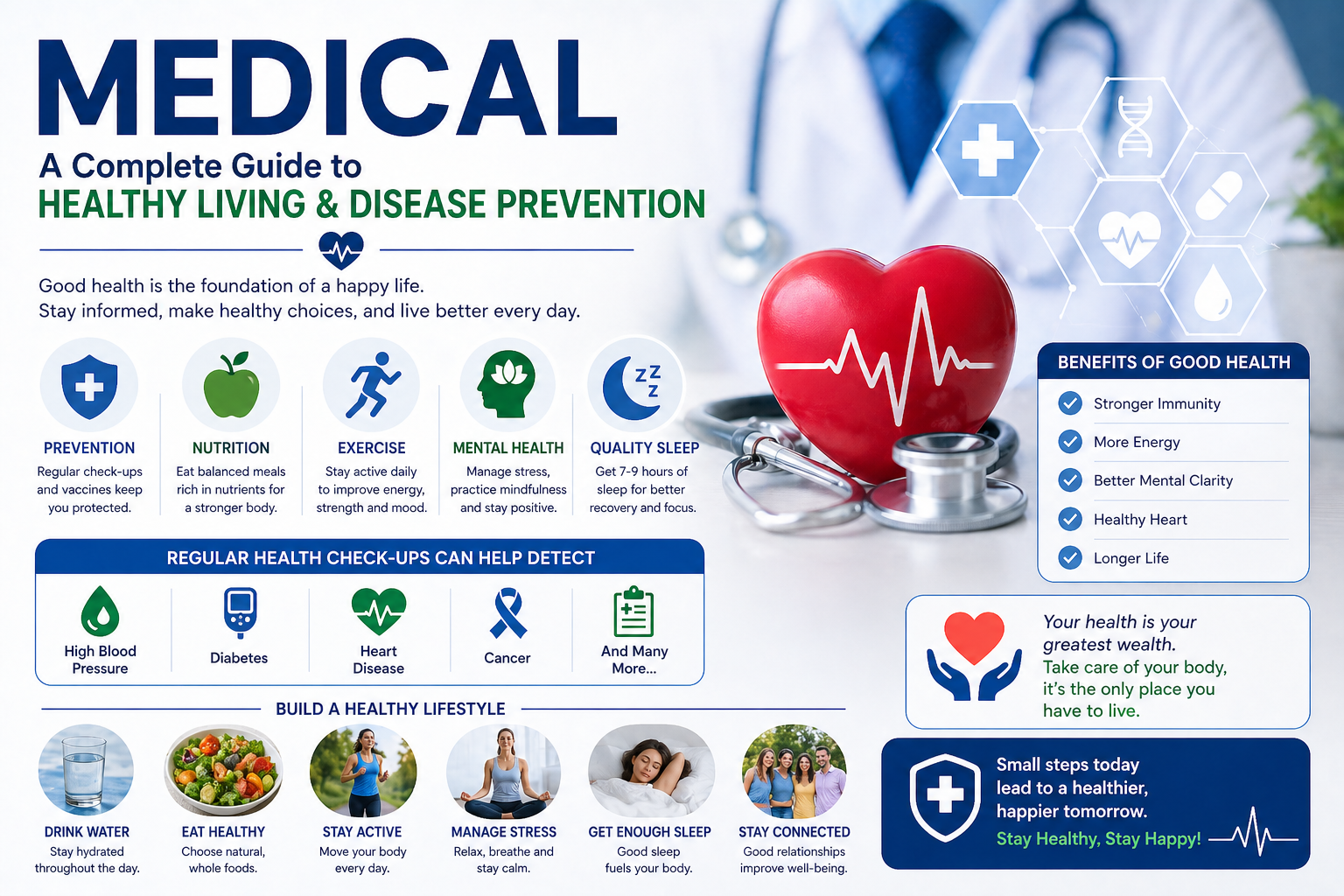
Benefits of Maintaining Good Health:
- Increased energy levels
- Better physical performance
- Improved mental clarity
- Stronger immunity
- Longer life expectancy
Poor health can affect every aspect of life, including work, relationships, and emotional stability.
Preventive Healthcare: The Key to Long-Term Wellness
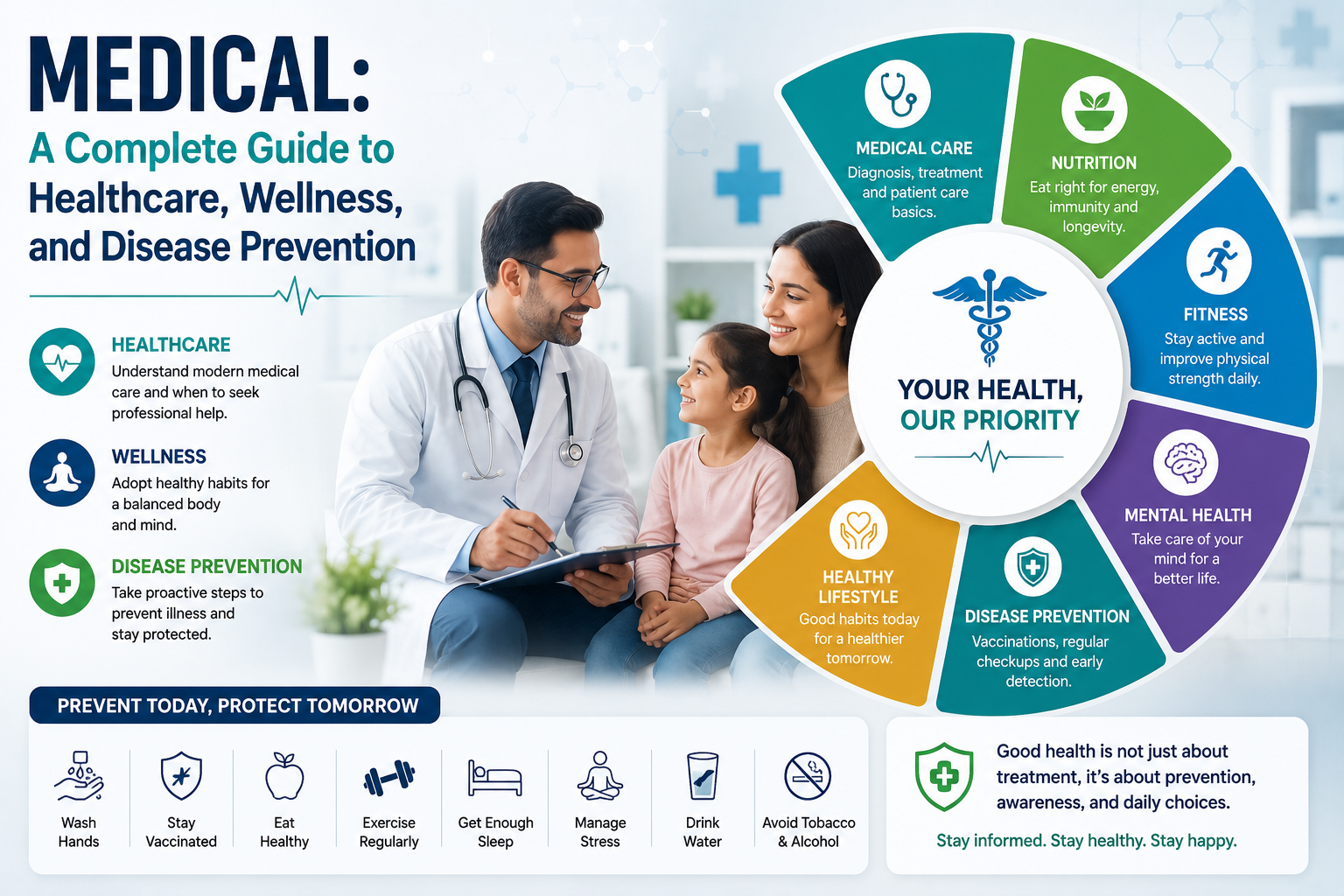
Preventive healthcare focuses on avoiding diseases before they occur. It is one of the most effective ways to maintain good health.
Examples of Preventive Care:
- Regular medical check-ups
- Vaccinations
- Health screenings
- Healthy lifestyle habits
Why Preventive Care Matters:
- Detects diseases early
- Reduces medical expenses
- Improves treatment success rates
- Increases life expectancy
Prevention is often more effective and less expensive than treatment.
Common Medical Conditions
Understanding common health issues helps individuals take preventive action.
1. Heart Disease
Heart disease is one of the leading causes of death worldwide.
Common Causes:
- Poor diet
- Smoking
- Lack of exercise
- High stress levels
Prevention:
- Exercise regularly
- Eat healthy foods
- Avoid smoking
2. Diabetes
Diabetes occurs when the body cannot properly regulate blood sugar levels.
Symptoms:
- Increased thirst
- Frequent urination
- Fatigue
Prevention:
- Maintain healthy weight
- Reduce sugar intake
- Stay active
3. Obesity
Obesity increases the risk of many serious diseases.
Causes:
- Overeating
- Lack of physical activity
- Unhealthy lifestyle habits
Prevention:
- Balanced diet
- Regular exercise
- Portion control
4. High Blood Pressure (Hypertension)
Hypertension is often called the “silent killer” because it may not show symptoms.
Risks:
- Heart attack
- Stroke
- Kidney disease
Prevention:
- Reduce salt intake
- Exercise regularly
- Manage stress
5. Respiratory Diseases
Conditions like asthma and chronic bronchitis affect breathing and lung health.
Role of Nutrition in Medical Health
Nutrition plays a vital role in maintaining good health.
Healthy Eating Tips:
- Eat fruits and vegetables daily
- Choose whole grains
- Include lean proteins
- Avoid processed foods
- Drink enough water
A balanced diet supports immunity, energy, and mental well-being.
Importance of Physical Activity
Exercise is one of the best ways to maintain medical health.
Benefits:
- Improves heart health
- Strengthens muscles and bones
- Helps maintain healthy weight
- Reduces stress and anxiety
Recommended Activities:
- Walking
- Jogging
- Yoga
- Strength training
Even 30 minutes of daily activity can make a significant difference.
Mental Health and Medical Wellness
Mental health is an essential part of overall medical wellness.
Common Mental Health Issues:
- Anxiety
- Depression
- Stress
Ways to Improve Mental Health:
- Practice mindfulness
- Get enough sleep
- Build healthy relationships
- Seek professional help if needed
Mental and physical health are closely connected.
Importance of Sleep
Sleep is essential for recovery and body function.
Benefits of Good Sleep:
- Improves concentration
- Supports immunity
- Enhances mood
- Helps physical recovery
Aim for 7–9 hours of quality sleep every night.
Hygiene and Disease Prevention
Good hygiene prevents infections and promotes overall health.
Important Hygiene Habits:
- Wash hands regularly
- Maintain oral hygiene
- Keep living spaces clean
- Practice safe food handling
Simple habits can significantly reduce disease risk.
Medical Treatments and Modern Healthcare
Medical treatments help diagnose, manage, and cure diseases.
Types of Treatments:
- Medications
- Surgery
- Physical therapy
- Mental health therapy
Modern healthcare technology has made treatments more effective and accessible.
Role of Technology in Medicine
Technology has transformed the healthcare industry.
Innovations:
- Telemedicine
- AI-powered diagnosis
- Robotic surgery
- Digital health records
These advancements improve patient care and medical accuracy.
Lifestyle Habits for Better Health
Healthy daily habits are essential for long-term wellness.
Healthy Lifestyle Tips:
- Eat balanced meals
- Stay physically active
- Manage stress
- Avoid smoking and alcohol
- Stay hydrated
Small lifestyle changes can lead to major health improvements.
Common Mistakes People Make
1. Ignoring Symptoms
Delaying medical attention can worsen health problems.
2. Self-Medication
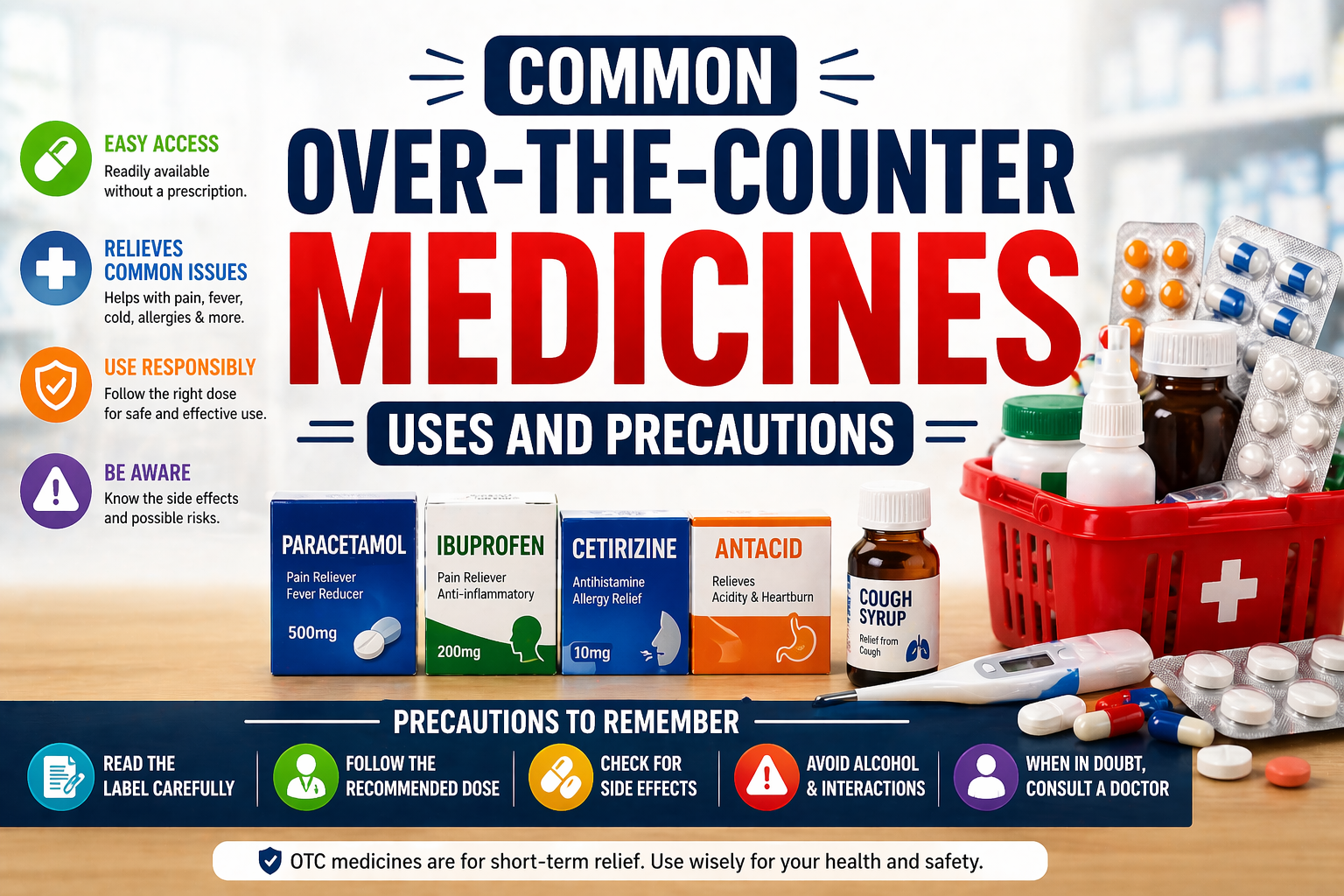
Taking medicines without professional advice can be risky.
3. Lack of Physical Activity
A sedentary lifestyle increases disease risk.
4. Poor Sleep Habits
Insufficient sleep affects both physical and mental health.
Future of Medical Healthcare
Healthcare continues to evolve rapidly.
Emerging Trends:
- Personalized medicine
- Gene therapy
- Wearable health devices
- AI-driven healthcare systems
These innovations are expected to improve medical care and patient outcomes.
Final Thoughts
Medical health is the foundation of a long and fulfilling life. By understanding healthcare basics, practicing preventive care, and maintaining healthy habits, individuals can significantly improve their quality of life.
Good health is not achieved overnight—it requires consistent effort and awareness. Small daily choices like eating healthier, staying active, sleeping well, and managing stress can create lasting positive changes.
Remember, your health is your greatest asset. Take care of it today to build a healthier and happier future.