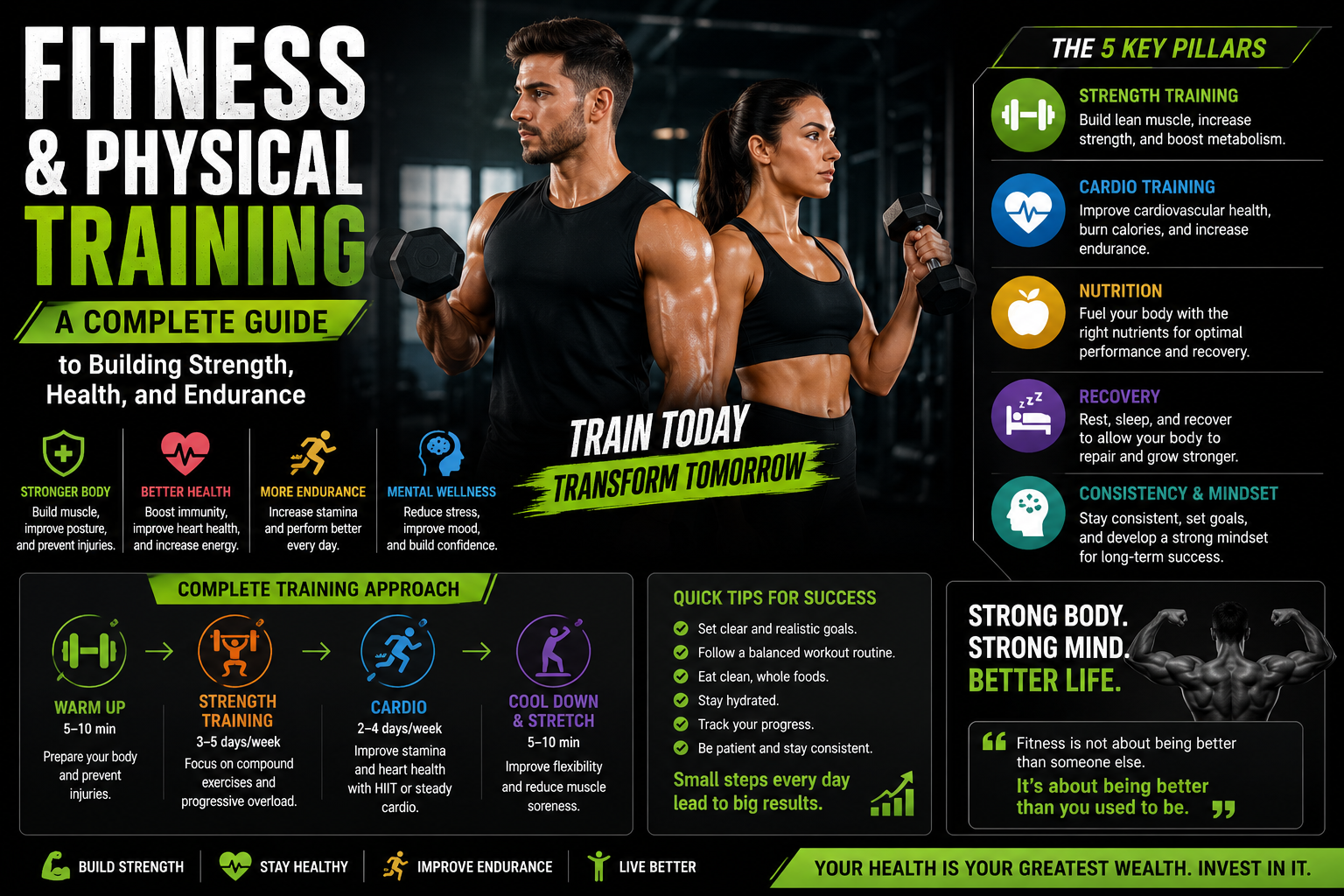
Fitness and physical training are essential parts of a healthy and active lifestyle. In today’s modern world, many people spend long hours sitting, using screens, and following unhealthy routines. As a result, physical activity has become more important than ever.
Regular fitness training improves not only physical strength but also mental health, energy levels, and overall quality of life. Whether your goal is weight loss, muscle building, increased stamina, or simply staying healthy, physical training plays a major role in achieving it.
In this detailed guide, we’ll explore everything you need to know about fitness and physical training, including benefits, workout types, nutrition, recovery, and tips for long-term success.
What Is Fitness?
Fitness refers to the body’s ability to perform daily activities efficiently without excessive fatigue. A fit person has good strength, flexibility, endurance, balance, and overall health.
Fitness is not just about appearance—it’s about maintaining physical and mental well-being.
What Is Physical Training?
Physical training is a planned and structured form of exercise designed to improve fitness and overall body performance.
It includes activities such as:
- Strength training
- Cardio exercises
- Flexibility training
- Endurance workouts
- Sports and athletic training
Physical training helps individuals improve their health and achieve specific fitness goals.
Importance of Fitness and Physical Training
Maintaining fitness is essential for living a healthy life.
Benefits of Physical Training:
- Improves heart health
- Builds muscle strength
- Increases energy levels
- Reduces stress and anxiety
- Helps maintain healthy weight
- Improves flexibility and posture
- Boosts confidence and mental health
Regular exercise also reduces the risk of chronic diseases such as diabetes, obesity, and heart disease.
Types of Fitness Training
There are different forms of physical training, each with unique benefits.
1. Strength Training
Strength training focuses on building muscle and improving body strength.
Examples:
- Weightlifting
- Resistance bands
- Bodyweight exercises
Benefits:
- Builds muscle mass
- Increases metabolism
- Improves bone strength
2. Cardiovascular Training
Cardio exercises improve heart and lung function.
Examples:
- Running
- Cycling
- Swimming
- Jump rope
Benefits:
- Burns calories
- Improves endurance
- Supports heart health
3. Flexibility Training
Flexibility exercises improve movement and reduce injury risk.
Examples:
- Stretching
- Yoga
- Pilates
Benefits:
- Improves mobility
- Reduces muscle stiffness
- Enhances posture
4. Endurance Training
Endurance training helps the body perform activities for longer periods.
Examples:
- Long-distance running
- Hiking
- Rowing
Benefits:
- Increases stamina
- Improves breathing efficiency
- Boosts physical performance
5. Functional Training
Functional training focuses on movements used in daily life.
Examples:
- Squats
- Lunges
- Push-ups
Benefits:
- Improves balance and coordination
- Enhances daily movement abilities
Importance of Warm-Up and Cool-Down
Warm-ups and cool-downs are essential parts of physical training.
Warm-Up Benefits:
- Prepares muscles for exercise
- Reduces injury risk
- Increases blood circulation
Cool-Down Benefits:
- Helps muscles recover
- Reduces soreness
- Gradually lowers heart rate
Never skip these important steps.
Role of Nutrition in Fitness
Nutrition plays a major role in physical performance and recovery.
Essential Nutrients:
- Protein for muscle repair
- Carbohydrates for energy
- Healthy fats for body function
- Vitamins and minerals for recovery
Healthy Eating Tips:
- Eat balanced meals
- Stay hydrated
- Avoid excessive junk food
- Consume enough protein
Fitness and nutrition work together for better results.
Importance of Hydration
Water is essential during physical training.
Benefits of Staying Hydrated:
- Improves performance
- Prevents fatigue
- Supports muscle function
- Regulates body temperature
Drink enough water before, during, and after workouts.
Mental Benefits of Fitness
Exercise benefits mental health as much as physical health.
Mental Health Benefits:
- Reduces stress
- Improves mood
- Boosts self-confidence
- Helps fight anxiety and depression
Regular physical activity releases endorphins, often called “feel-good hormones.”
Creating a Fitness Routine
A structured routine helps maintain consistency.
Tips for Building a Routine:
- Set realistic goals
- Start slowly
- Choose enjoyable activities
- Stay consistent
- Track your progress
Consistency is the key to long-term success.
Common Fitness Goals
People train for different reasons.
Popular Goals:
- Weight loss
- Muscle gain
- Improved stamina
- Better flexibility
- General health improvement
Clear goals help maintain motivation.
Common Mistakes in Physical Training
Avoiding mistakes helps improve results and prevent injuries.
1. Overtraining
Exercising too much can cause fatigue and injuries.
2. Poor Form
Incorrect exercise technique increases injury risk.
3. Skipping Rest Days
Recovery is essential for muscle growth.
4. Ignoring Nutrition
Poor diet reduces workout effectiveness.
Importance of Rest and Recovery
Rest is just as important as exercise.
Benefits of Recovery:
- Repairs muscles
- Prevents burnout
- Improves performance
Sleep also plays a crucial role in recovery.
Fitness for Different Age Groups
Fitness is important for everyone, regardless of age.
Children:
Supports growth and development.
Adults:
Improves strength, energy, and health.
Seniors:
Maintains mobility and reduces age-related health risks.
Technology and Modern Fitness
Technology has changed the fitness industry.
Modern Fitness Tools:
- Fitness tracking apps
- Smartwatches
- Online workout programs
- Virtual personal trainers
These tools make fitness more accessible and personalized.
Long-Term Benefits of Fitness
Maintaining physical fitness provides lifelong advantages.
Long-Term Benefits:
- Better health and longevity
- Reduced disease risk
- Improved confidence
- Better quality of life
Fitness is an investment in your future.
Tips to Stay Motivated
Staying motivated can be challenging.
Motivation Tips:
- Set achievable goals
- Celebrate progress
- Exercise with friends
- Try new workouts
- Focus on consistency, not perfection
Small daily efforts create lasting results.
Final Thoughts
Fitness and physical training are essential for a healthy and balanced life. Regular exercise improves strength, endurance, mental health, and overall well-being.
You don’t need to become an athlete to enjoy the benefits of fitness. Simple daily activities like walking, stretching, and basic workouts can create major positive changes over time.
The key is consistency, proper nutrition, and a positive mindset. Start small, stay committed, and make fitness a permanent part of your lifestyle.
Remember, every workout brings you one step closer to a healthier and stronger version of yourself.