Medical treatments are essential for maintaining health, managing diseases, and improving quality of life. From simple home remedies to advanced medical procedures, treatments play a vital role in helping people recover, stay healthy, and live longer lives.
In today’s world, healthcare has evolved significantly. With new technologies, medications, and therapies, patients now have access to more effective and personalized treatment options than ever before.
This guide will help you understand different types of treatments, their importance, and how they contribute to overall well-being.
What Are Medical Treatments?
Medical treatments refer to any method used to cure, manage, or prevent diseases and health conditions. These treatments can vary widely depending on the illness, severity, and individual patient needs.
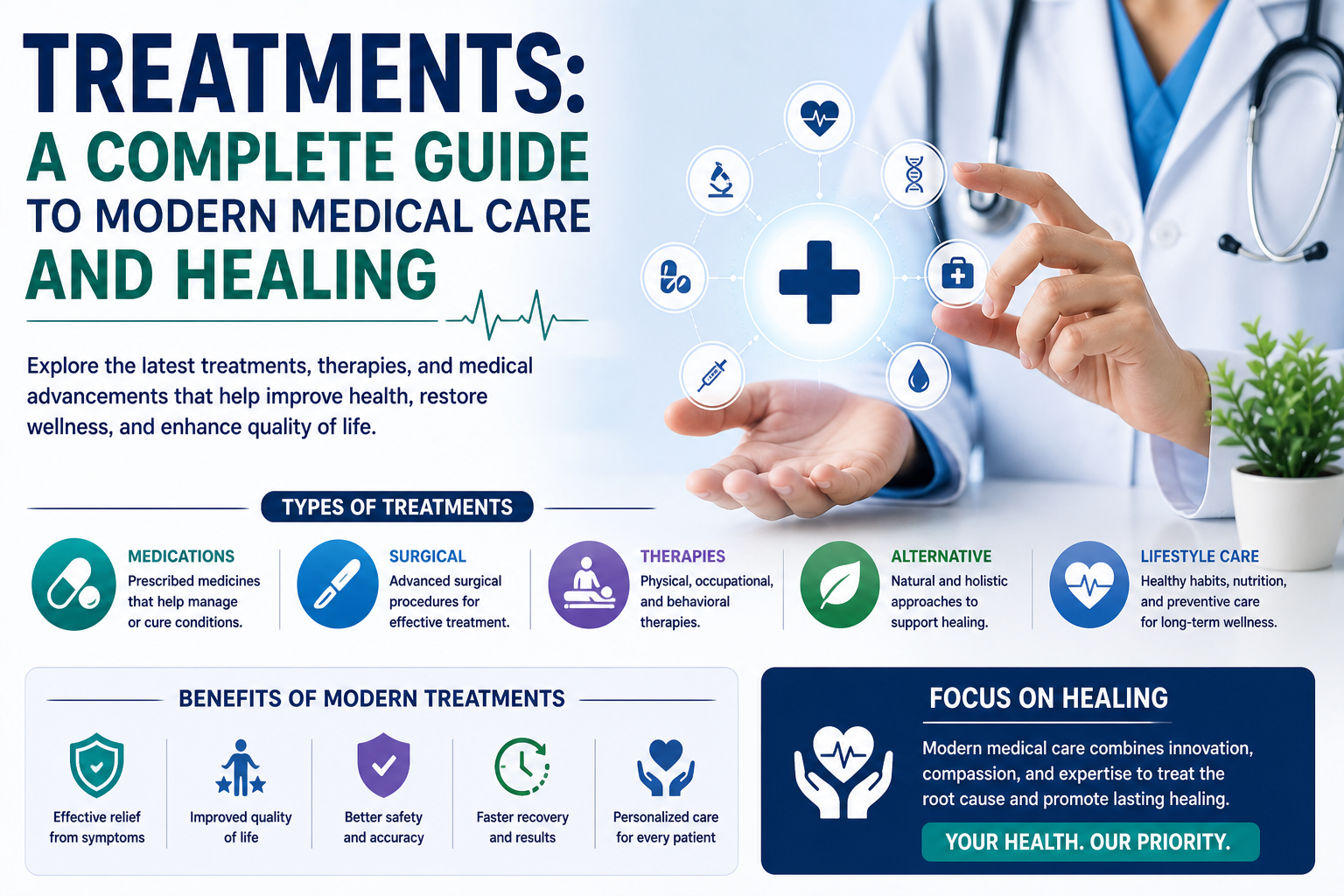
They include:
- Medications
- Therapies
- Surgical procedures
- Lifestyle changes
- Preventive care
The goal of treatment is not only to eliminate illness but also to improve comfort, functionality, and long-term health.
Types of Medical Treatments
Understanding the different types of treatments can help you make informed healthcare decisions.
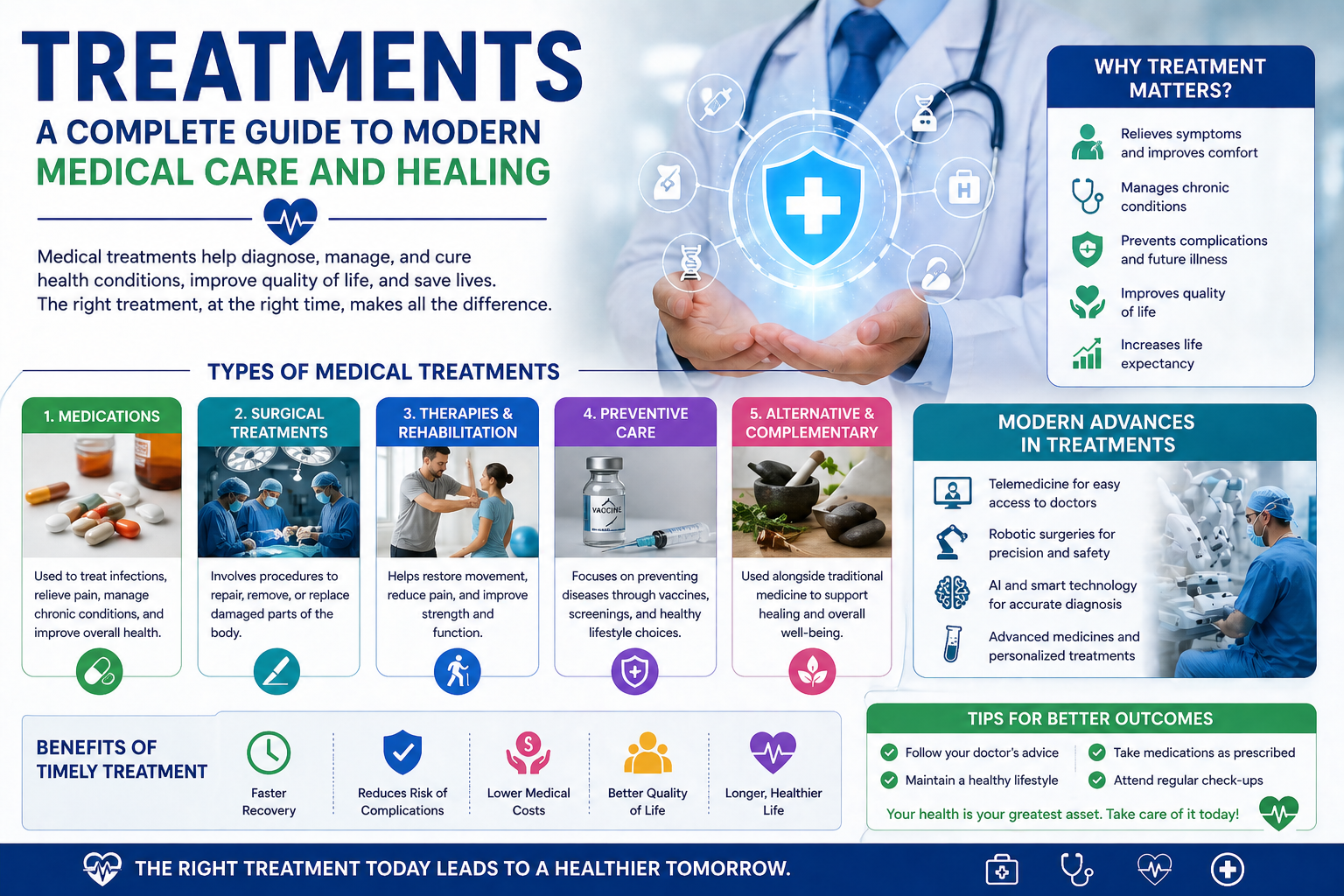
1. Medication-Based Treatments
Medications are one of the most common forms of treatment. They are used to:
- Relieve symptoms
- Treat infections
- Manage chronic conditions
- Prevent diseases
Examples:
- Antibiotics for infections
- Pain relievers for discomfort
- Insulin for diabetes
Proper use of medication is crucial, and it should always be taken under medical supervision.
2. Surgical Treatments
Surgery involves physical procedures to treat or remove health issues. It is often used when medications or therapies are not sufficient.
Common Surgical Treatments:
- Removal of tumors
- Organ transplants
- Repair of injuries
Advancements in technology have made surgeries safer and less invasive, reducing recovery time.
3. Physical Therapy and Rehabilitation
Physical therapy helps restore movement and function after injury or illness.
Benefits:
- Improves mobility
- Reduces pain
- Speeds up recovery
- Prevents future injuries
It is commonly used for patients recovering from accidents, surgeries, or chronic conditions.
4. Preventive Treatments
Preventive care focuses on avoiding diseases before they occur.
Examples:
- Vaccinations
- Regular health screenings
- Healthy lifestyle habits
Preventive treatments are often the most cost-effective way to maintain long-term health.
5. Alternative and Complementary Treatments
These treatments are used alongside conventional medicine to improve well-being.
Examples:
- Acupuncture
- Herbal medicine
- Yoga and meditation
While beneficial, these should be used carefully and ideally alongside professional medical advice.
Importance of Early Treatment
One of the most critical aspects of healthcare is early intervention. Detecting and treating a condition early can significantly improve outcomes.
Benefits of Early Treatment:
- Faster recovery
- Lower healthcare costs
- Reduced complications
- Better quality of life
Ignoring symptoms or delaying treatment can lead to more serious health problems.
Role of Technology in Modern Treatments
Technology has transformed the way treatments are delivered.
Innovations in Healthcare:
- Telemedicine for remote consultations
- Robotic surgeries for precision
- AI-based diagnostics
- Advanced imaging techniques
These advancements allow doctors to diagnose and treat conditions more accurately and efficiently.
Personalized Medicine
Modern treatments are becoming more personalized. Instead of a one-size-fits-all approach, healthcare providers now tailor treatments based on individual needs.
Factors Considered:
- Genetics
- Lifestyle
- Medical history
Personalized medicine improves effectiveness and reduces side effects.
Lifestyle as a Treatment
In many cases, lifestyle changes can be as effective as medical treatments.
Healthy Lifestyle Practices:
- Balanced diet
- Regular exercise
- Stress management
- Adequate sleep
These changes not only support recovery but also prevent future health issues.
Mental Health Treatments
Mental health is a crucial part of overall well-being. Treatments for mental health conditions include:
- Counseling and therapy
- Medication
- Mindfulness techniques
Addressing mental health is essential for a balanced and healthy life.
Risks and Side Effects of Treatments
While treatments are designed to help, they may come with risks or side effects.
Common Concerns:
- Allergic reactions
- Medication side effects
- Surgical complications
It’s important to discuss potential risks with healthcare professionals before starting any treatment.
Choosing the Right Treatment
Selecting the right treatment depends on several factors:
- Nature of the illness
- Severity of the condition
- Patient preferences
- Medical advice
Always consult a qualified healthcare provider to determine the best course of action.
Even the best treatment will not be effective if not followed properly.
Tips:
- Take medications as prescribed
- Attend follow-up appointments
- Follow lifestyle recommendations
- Report any unusual symptoms
Consistency and discipline are key to successful treatment outcomes.
Future of Medical Treatments
The future of healthcare looks promising with ongoing advancements.
Emerging Trends:
- Gene therapy
- Regenerative medicine
- Personalized vaccines
- Digital health monitoring
These innovations are expected to revolutionize treatment and improve patient outcomes.
Final Thoughts
Medical treatments are a cornerstone of modern healthcare. They help us recover from illness, manage chronic conditions, and improve our overall quality of life.
However, treatment is most effective when combined with awareness, prevention, and a healthy lifestyle. By staying informed and making smart health decisions, you can take control of your well-being.